Businesses rely on various assets to support daily operations. However, as operations grow, companies often face challenges such as inaccurate records, limited visibility, and inefficient monitoring processes. Centralized asset management systems help address these issues by improving visibility and record accuracy.
Managing asset records in one system becomes increasingly important when companies handle assets across multiple departments or locations. A centralized approach helps teams access the same information without relying on scattered documents. Instead of spending time searching for records manually, employees can locate asset data quickly and reduce administrative mistakes.
Before discussing solutions, it is important to understand how poor asset visibility can affect daily operations and long-term business performance.
Why Asset Visibility Is Important
Asset visibility means having accurate information about what a company owns, where assets are located, and how they are being used. Without proper visibility, businesses may struggle with:
- Duplicate asset purchases because existing resources are not properly tracked and identified
- Unexpected maintenance expenses caused by missed service schedules or delayed inspections
- Lost or misplaced assets due to limited monitoring and inconsistent records
- Difficulty planning future investments because businesses lack accurate information about asset conditions and performance
- Lower operational efficiency caused by incomplete data and time-consuming manual processes
As businesses continue to grow and manage more assets across different locations or departments, these challenges can become more noticeable. Over time, poor asset visibility may affect productivity, increase operational costs, and create difficulties in maintaining efficient business operations.
Common Challenges in Asset Management
Inconsistent Records
When multiple teams maintain separate records, information can become outdated or inaccurate. This creates confusion when employees need to locate or verify asset details.
Difficulty Monitoring Asset Conditions
Businesses need to know whether assets are functioning properly or approaching replacement periods. Without proper monitoring, maintenance often becomes reactive rather than planned.
Time-Consuming Administrative Work
Manual processes usually require employees to update records, review inventories, and verify asset status individually. These repetitive tasks consume time that could be used for more valuable activities.
Limited Visibility Across Locations
For businesses operating in multiple branches or offices, tracking assets becomes more difficult without centralized information.
How Technology Supports Better Asset Management
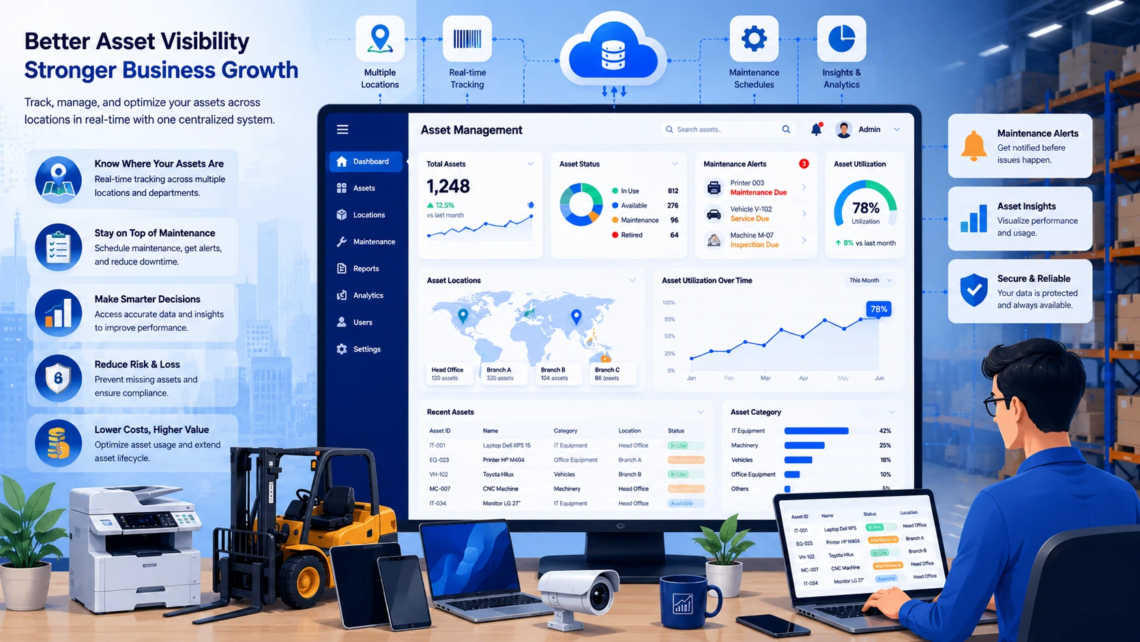
Digital solutions help businesses organize information and improve asset monitoring. Instead of relying on manual methods, companies can collect and maintain asset data in a centralized platform.
Another important consideration is tracking company assets throughout their entire lifecycle. Businesses need visibility from acquisition until disposal to understand asset performance and identify resources that may require replacement or maintenance. Companies interested in improving asset visibility can explore solutions for tracking company assets to understand how software can support more organized asset management processes.
Technology also allows businesses to monitor maintenance schedules, update asset information, and reduce the risk of missing critical data.
Benefits of Better Asset Management Practices
Businesses that improve asset visibility can experience several advantages:
Better Cost Control
Accurate asset records help businesses avoid unnecessary spending caused by duplicate purchases or underutilized resources. Companies can identify available assets before buying new equipment and monitor maintenance costs more effectively. Better visibility also reduces the possibility of losing assets, which can create unexpected replacement expenses.
Improved Decision-Making
Reliable asset information allows managers to make decisions based on actual data rather than assumptions. Businesses can evaluate asset performance, identify equipment that frequently requires repairs, and determine when replacement becomes more cost-effective than continued maintenance. This information also supports more accurate financial and operational planning.
Higher Productivity
Employees often spend a significant amount of time searching for asset information, checking ownership records, or confirming asset locations. Better asset management practices reduce these manual tasks and allow teams to access information more quickly. As a result, employees can focus more on operational responsibilities and complete daily activities more efficiently.
Stronger Long-Term Planning
Understanding how assets perform over time helps businesses plan future investments more accurately. Companies can forecast replacement schedules, estimate future maintenance expenses, and allocate budgets based on actual asset conditions. This creates a more organized approach to business growth and resource planning.
Conclusion
As businesses continue to expand, maintaining accurate asset information becomes increasingly important. Companies that rely on outdated records or manual tracking methods may face challenges such as missing assets, inefficient resource allocation, and unexpected operational costs. Without clear visibility, businesses can struggle to understand how assets are being used and whether they continue to provide value to daily operations.
Better asset visibility helps companies reduce operational issues, improve resource utilization, and support long-term growth objectives. By using organized management practices and suitable technology, businesses can make more informed decisions regarding maintenance, replacements, and future investments. Over time, having a structured approach to asset management can help businesses improve efficiency and build a stronger operational foundation for sustainable growth.