Glowing skin — that fresh, lit-from-within radiance — is the goal behind half the products on the skincare shelf. Serums and moisturizers do the daily heavy lifting, but face masks are the specialists: concentrated treatments designed to deliver a visible boost in a single sitting. That is why the search for the best face mask for glowing skin never really ends.
But not all masks do the same thing. A clay mask that rescues an oily T-zone will do nothing for parched, flaky cheeks, and a hydrating sheet mask will not unclog congested pores. This guide breaks down the main mask types, the glow-giving ingredients to look for, how to match a mask to your skin type, and the application mistakes that quietly sabotage your results.
Why Face Masks Work for Glow
Face masks work differently from your everyday products. Because they sit on the skin for an extended period — usually ten to twenty minutes — they create a semi-sealed environment that helps active ingredients penetrate more effectively than a serum you rinse off or a moisturizer that sinks in quickly. The result is a concentrated dose of hydration, exfoliation, or nourishment exactly where you need it.
Think of masks as a supplement to your routine, not a replacement. Your cleanser, moisturizer, and sunscreen do the daily work; a mask is the weekly treatment that addresses a specific concern — dullness, dryness, congestion, or uneven tone — with extra intensity.
The Main Types of Face Masks
Clay and Mud Masks
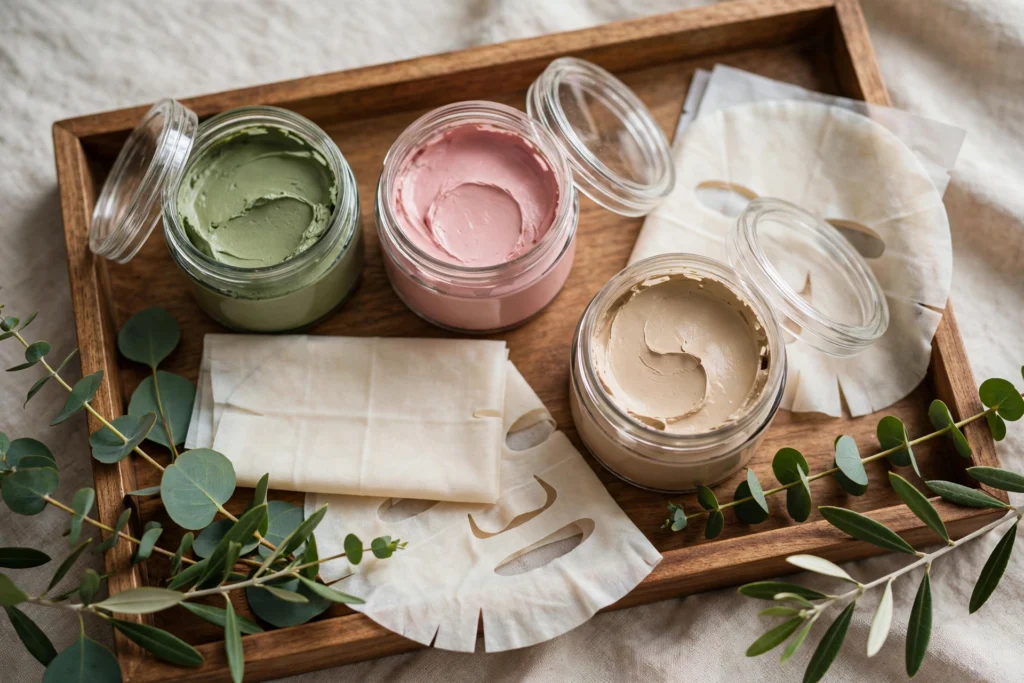
Clay masks (kaolin, bentonite) are the classic choice for oily and combination skin. As they dry, they draw out excess oil and impurities from the pores, leaving skin looking clearer and more matte. They are excellent for congested T-zones but can be drying, so people with dry skin should use them sparingly or only on oily areas.
Sheet Masks
These serum-soaked fabric or hydrogel sheets cling to the face and deliver a flood of hydration and brightening ingredients. They are the gentlest glow option and suit nearly every skin type. The effect is often immediate — plump, dewy skin — though it is more of a temporary boost than a long-term fix. They are perfect before an event when you want to look fresh fast.
Gel and Cream Masks
Gel masks cool and hydrate, making them ideal for dry, sensitive, or sun-stressed skin. Cream masks are richer, delivering nourishing oils and barrier-repairing ingredients. Both are leave-on-and-rinse formulas that feel soothing rather than stripping, and they layer well under your regular moisturizer.
Exfoliating Masks
These use alpha-hydroxy acids (like glycolic or lactic acid) or enzymes (like papaya or pumpkin) to dissolve the dull, dead skin cells sitting on the surface. Regular gentle exfoliation is one of the fastest routes to glow, because it reveals the fresher skin underneath and lets your other products absorb better. Start slowly — once a week — since over-exfoliation causes redness and sensitivity.
Overnight and Sleeping Masks
Sleeping masks are the marathon runners of the mask world. Applied as the last step of your evening routine, they seal in everything underneath and work while you sleep. They are essentially supercharged moisturizers, and they are one of the easiest ways to wake up with noticeably softer, more radiant skin.
Key Ingredients for Glowing Skin
Whatever mask type you choose, these are the ingredients that actually deliver radiance:
- Vitamin C: A well-studied brightening antioxidant that helps even out skin tone and defend against the dullness caused by environmental stress.
- Niacinamide: Strengthens the skin barrier while improving tone and texture — a versatile glow ingredient that suits most skin types.
- Hyaluronic acid: A hydration powerhouse that plumps the skin with moisture, making it look smoother and more luminous.
- AHAs (glycolic, lactic acid): Gently exfoliate away dull surface cells for a brighter, more even complexion.
- Antioxidants (green tea, vitamin E): Help protect skin from the daily damage that leads to a tired, lackluster look.
- Aloe vera and chamomile: Calm and soothe, which matters because irritated skin never glows — redness and glow are opposites.
How to Choose a Mask for Your Skin Type
- Oily or acne-prone skin: Clay and mud masks are your best friends — they absorb excess oil and help keep pores clear. Look for formulas with niacinamide or salicylic acid for extra refining power.
- Dry skin: Reach for cream, gel, or overnight masks loaded with hyaluronic acid, ceramides, and nourishing oils. Avoid clay masks or use them only on the oiliest spots.
- Sensitive skin: Choose fragrance-free gel or cream masks with calming ingredients like aloe, chamomile, or oatmeal. Skip strong exfoliating acids and anything with added fragrance or essential oils.
- Combination skin: Multi-masking is made for you — apply a clay mask on the oily T-zone and a hydrating mask on drier cheeks in the same session.
- Dull, tired skin (any type): Brightening sheet masks with vitamin C or niacinamide, or a gentle weekly exfoliating mask, will make the fastest visible difference.
How to Use a Face Mask Correctly
- Start with a clean face. Always cleanse first — a mask applied over makeup, sunscreen, or the day’s grime cannot do its job properly.
- Patch test new products. Dab a small amount behind your ear or on your jawline and wait a day. This is especially important with exfoliating masks.
- Apply an even layer. For jar masks, use clean fingers or a brush and spread a uniform layer, avoiding the immediate eye and lip area.
- Respect the timing. Follow the product’s recommended time — usually ten to twenty minutes. Leaving a mask on longer does not make it work better; with clay and acid masks, it can cause irritation.
- Rinse gently with lukewarm water. Hot water strips the skin; cold water is uncomfortable and less effective at removing residue. Lukewarm is the sweet spot.
- Seal it in. After masking, apply your serum and moisturizer while skin is still slightly damp. The mask prepped your skin — now lock in the benefits.
Mistakes That Sabotage Your Results
- Masking too often: More is not better. Most masks are designed for one to three uses per week. Daily masking, especially with clay or exfoliating formulas, damages the skin barrier and causes the exact dullness you are trying to fix.
- Leaving clay masks on until they crack: A clay mask should be removed while it is still slightly tacky, not bone-dry and tight. Over-drying pulls moisture out of your skin along with the oil.
- Mixing too many actives: Using an exfoliating acid mask on the same day as a strong vitamin C serum or retinol is a recipe for irritation. Space out your potent products.
- Skipping moisturizer afterward: A mask is a treatment, not a complete routine. Without moisturizer to seal in the benefits, much of that glow evaporates within the hour.
- Ignoring your skin’s feedback: Tingling that turns into burning, persistent redness, or new breakouts after masking means that product is wrong for you — no matter how good the reviews are.
Frequently Asked Questions
How often should I use a face mask?
For most people, one to two times per week is the sweet spot. Hydrating sheet masks can be used more often since they are gentle, but clay and exfoliating masks should stay at once or twice weekly to avoid over-stripping the skin. Always follow the specific product’s guidance.
Can a face mask replace my moisturizer or serum?
No. Masks are intensive treatments, not daily maintenance. They do not provide the consistent, everyday hydration, barrier support, and sun protection your routine needs. Think of it this way: a mask is a great workout, but your moisturizer is eating well every day — you need both.
Are DIY homemade masks as good as store-bought ones?
Store-bought masks are formulated, preserved, and pH-balanced for safety and stability, which homemade mixtures cannot match. Kitchen ingredients like lemon juice or baking soda can irritate or damage skin, and DIY masks spoil quickly. If you enjoy the ritual, stick to gentle options like plain honey or oatmeal — but manage your expectations.
Do sheet masks really work, or are they just hype?
They genuinely work for hydration and a temporary glow boost. The sheet keeps the serum in close contact with your skin, improving absorption compared to a serum alone. The effect is real but short-lived — think of sheet masks as a quick refresh rather than a long-term treatment.
Can sensitive skin use face masks?
Absolutely — you just need to choose carefully. Fragrance-free gel and cream masks with soothing ingredients are usually well tolerated. Avoid clay masks, strong acids, and peel-off formulas, which can be too aggressive. And patch testing is especially important for reactive skin.
Final Thoughts
The best face mask for glowing skin is the one matched to your skin type and your specific concern — clay for congestion, sheet masks for instant hydration, exfoliating formulas for dullness, and overnight masks for deep nourishment. Choose proven glow ingredients, use the mask correctly and consistently, and avoid the over-masking trap.
For solid, dermatologist-backed fundamentals to build the rest of your routine around, the American Academy of Dermatology’s everyday skincare resources are well worth bookmarking. And do not forget the details: glow is a whole-face project, so while your mask works its magic, make sure the delicate under-eye area gets its own targeted care with an eye cream for dark circles — because truly radiant skin has no tired-looking exceptions.




One comment on “Best Face Mask for Glowing Skin: Top Picks & Tips”