Dark circles are one of the most common skincare complaints — and one of the most misunderstood. That shadowy, tired look under the eyes can make you appear exhausted even after a full night’s sleep, and it sends thousands of people searching for the best eye cream for dark circles every single day.
Here is the honest truth upfront: eye creams can genuinely help, but no cream works miracles on every type of dark circle. The skin under your eyes is the thinnest on your face, and dark circles have several different causes — which means the right product depends on what is actually causing yours. This guide explains what creates dark circles, which ingredients are worth your money, how to apply eye cream correctly, and the habits that make any product work better.
What Causes Dark Circles?
Before buying anything, it helps to know which kind of dark circles you have, because different causes respond to different treatments.
- Genetics: For many people, dark circles are simply inherited. If your parents have them, you are more likely to have them too, and this type is the hardest to change with topical products alone.
- Thin skin and visible blood vessels: The under-eye skin is extremely thin, so the blood vessels beneath can show through as a bluish or purplish tint. This becomes more noticeable with age as skin loses collagen and gets even thinner.
- Pigmentation: Extra melanin under the eyes — more common in medium to deep skin tones — creates brownish dark circles. Sun exposure makes this type worse.
- Lack of sleep: Poor sleep does not directly create dark circles, but it makes skin paler, which makes the darkness underneath more visible. It also encourages fluid to pool under the eyes.
- Allergies and rubbing: Itchy, watery eyes from allergies lead to rubbing, which irritates the delicate under-eye skin and can darken it over time.
- Dehydration and lifestyle factors: Not drinking enough water, too much salt, alcohol, and smoking can all make the under-eye area look duller and more shadowed.
How Eye Creams Work: Ingredients That Matter
Eye creams are simply moisturizers formulated for the delicate eye area — lighter, gentler, and often packed with targeted ingredients. Here are the ones with the best reputations for dark circles.
Ingredients That Target Pigmentation
If your dark circles are brownish, brightening ingredients are your best bet. Vitamin C is one of the most studied: it supports a more even skin tone and defends against the environmental damage that worsens pigmentation. Niacinamide (vitamin B3) is another strong choice, known for helping even out tone while strengthening the skin barrier. Kojic acid and licorice root extract also appear in brightening formulas, though they tend to work gradually and need consistent use.
Ingredients That Help With Puffiness
Bluish circles often come with morning puffiness, since fluid collects under the eyes overnight. Caffeine is the star ingredient here — it temporarily tightens the look of skin and helps the area appear less swollen. Applying your eye cream cold (some people keep it in the fridge) adds a soothing, de-puffing effect on top.
Ingredients That Hydrate and Plump
Sometimes dark circles look worse simply because the skin is dry and crepey. Hyaluronic acid draws moisture into the skin, making the under-eye area look smoother and plumper, which softens the appearance of shadows. Peptides and ceramides support the skin’s structure and barrier, helping thin under-eye skin look firmer over time. For an area this delicate, hydration alone can make a visible difference.
How to Choose the Right Eye Cream
With hundreds of options on the shelf, use this checklist to narrow it down:
- Match the product to your cause: Brownish circles need brightening ingredients; bluish, puffy circles need caffeine and cooling; crepey texture needs hydration and peptides.
- Read the ingredient list, not the marketing: Look for the ingredients above in meaningful positions on the list. Fancy packaging and celebrity endorsements tell you nothing about what is inside.
- Choose fragrance-free: The eye area is sensitive, and fragrance is one of the most common irritants in skincare. Unscented formulas are the safer choice.
- Consider the packaging: Ingredients like vitamin C break down with air and light exposure, so opaque tubes or pump bottles keep formulas fresher longer than open jars you dip your fingers into.
- Patch test first: Dab a small amount near the outer corner of one eye for a few days before committing. If you get stinging, redness, or watering, that formula is not for you.
How to Apply Eye Cream the Right Way
Even the best formula underperforms if it is applied badly. The under-eye area needs a gentle touch.
- Start with clean skin. Apply eye cream after cleansing and any watery serums, but before heavier moisturizers and sunscreen.
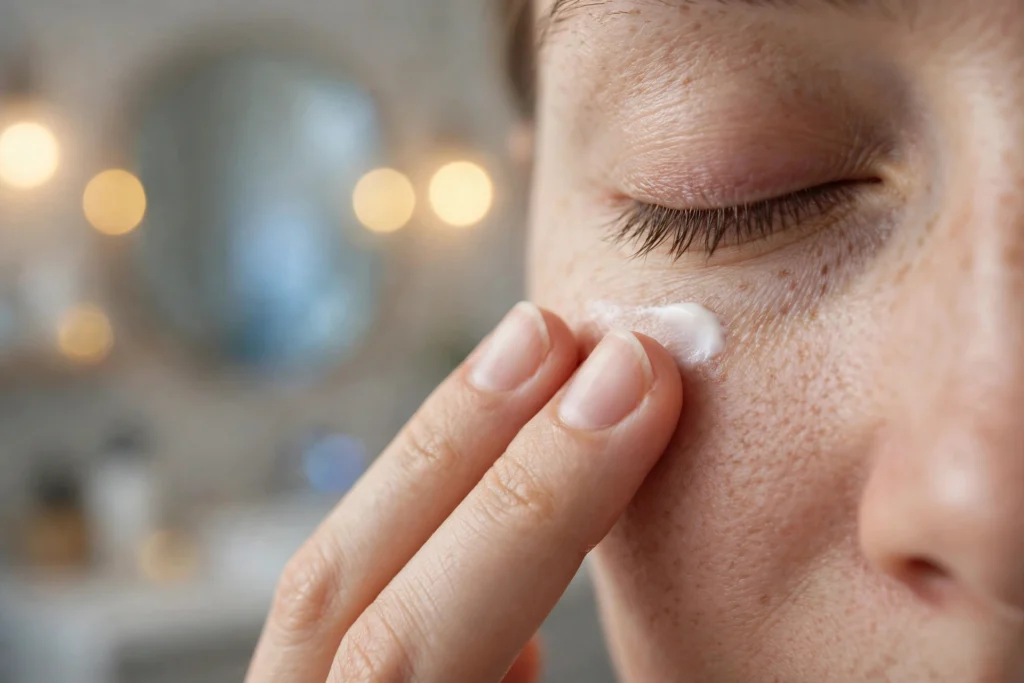
- Use a pea-sized amount for both eyes. More product does not mean better results — a tiny amount is enough, and excess just migrates into your eyes and causes irritation.
- Use your ring finger. It naturally applies the least pressure of all your fingers, which is exactly what this delicate skin needs.
- Pat, do not rub. Gently tap the cream along the orbital bone, from the inner corner outward. Rubbing stretches the skin and can make darkness worse over time.
- Apply morning and night. Consistency matters more than the price tag. Most ingredients need weeks of regular use to show visible change.
- Follow with sunscreen in the morning. UV exposure deepens pigmentation-based dark circles, so sun protection around the eyes is non-negotiable.
Lifestyle Habits That Make Eye Creams Work Better
No cream can outwork bad habits. These simple changes amplify whatever product you choose:
- Prioritize sleep: Seven to nine hours helps prevent the pale, puffy look that exaggerates dark circles. Sleeping slightly elevated can reduce morning fluid buildup.
- Wear sunglasses: They shield the eye area from UV rays that worsen pigmentation and from squinting, which deepens fine lines.
- Manage allergies: If your eyes itch, treat the allergies rather than rubbing. An antihistamine during allergy season can do more for your under-eyes than any cream.
- Watch salt and alcohol: Both encourage fluid retention and dehydration, which make the under-eye area look worse the next morning.
- Stay hydrated: Drinking enough water will not erase dark circles, but dehydrated skin always looks duller and more tired.
When to See a Dermatologist
Most dark circles are a cosmetic concern, but a dermatologist visit is worth it if your darkening appeared suddenly, affects only one eye, comes with swelling or pain, or has not responded to months of consistent care. A dermatologist can identify causes a cream cannot fix — like deep tear troughs, significant volume loss, or medical conditions — and discuss in-office options when appropriate. For a general overview of dark circle causes and at-home strategies, Healthline’s guide to dark circles under the eyes is a solid, well-organized starting point.
Frequently Asked Questions
Do eye creams actually remove dark circles?
They can improve the appearance of dark circles, but they rarely remove them entirely. Hydrating and brightening ingredients visibly soften pigmentation and puffiness with consistent use. However, circles caused by genetics, deep tear troughs, or visible blood vessels through very thin skin respond less to topical products — those cases may need professional treatments for dramatic change.
How long does it take to see results from an eye cream?
Expect at least four to six weeks of twice-daily use before judging a product. Skin cell turnover takes time, and brightening ingredients work gradually. If you see zero change after two to three months of consistent use, that formula is probably not addressing your particular cause.
Can I just use my regular moisturizer instead of an eye cream?
A good moisturizer will hydrate the under-eye area, which helps. But eye creams are formulated specifically for thinner, more sensitive skin and often contain targeted ingredients — like caffeine for puffiness — that regular moisturizers lack. If your main concern is dryness, moisturizer may suffice; for pigmentation or puffiness, a dedicated eye cream is the better tool.
At what age should I start using eye cream?
There is no magic age. Start when you notice a concern — whether that is puffiness in your twenties or crepey texture later. The single most effective “anti-aging” step for the eye area at any age is daily sun protection, which prevents the pigmentation and collagen breakdown that create dark circles in the first place.
Are expensive eye creams better than affordable ones?
Not necessarily. Price reflects branding, packaging, and marketing as much as formula quality. What matters is the ingredient list and whether those ingredients match your type of dark circles. Many affordable, fragrance-free eye creams contain the same proven ingredients as luxury options.
Final Thoughts
Finding the best eye cream for dark circles starts with knowing your enemy: identify whether your circles are pigment-based, vascular, or structural, then choose ingredients that target that cause. Apply gently and consistently, protect the area from the sun, and support your routine with decent sleep and allergy control.
And remember that the under-eye area is just one part of the picture. Dark circles often come with overall dull, tired-looking skin — and a weekly ritual with face masks for glowing skin can give the rest of your face the same brightening, hydrating attention your eyes are getting.







One comment on “Best Eye Cream for Dark Circles: A Buying Guide”