You step out of the shower, glance down at your legs, and notice them: tiny dark dots scattered across your skin, almost like the seeds on a strawberry. Sound familiar? Those dotted spots have a name — strawberry legs — and they are one of the most common skin complaints out there. The good news is that they are almost never a medical problem, and with a few changes to your routine, you can make them fade dramatically.
Strawberry legs is not actually a medical diagnosis. It is a nickname for the appearance of darkened, open pores or hair follicles on the legs, which become visible after shaving or hair removal. The dots are usually a mix of trapped oil, dead skin, and oxidized debris inside the follicle — not dirt, and not something you can simply scrub away in one shower. Because the look bothers so many people, especially in shorts-and-skirt season, it is worth understanding what causes it and how to treat it properly.
What Are Strawberry Legs, Exactly?
When you shave, you cut the hair at the surface of the skin, but the follicle underneath stays open. Air hits the oil and dead skin cells sitting inside that open follicle, and they oxidize — darken — the same way a cut apple turns brown. That is why the dots look dark even though your skin itself is clean. In many people, the appearance is made worse by keratosis pilaris, a harmless condition that creates tiny rough bumps around hair follicles, or by folliculitis, which is mild inflammation of the follicles themselves.
It helps to know that strawberry legs are a cosmetic concern, not a hygiene problem. No amount of harsh scrubbing will fix them overnight, and aggressive treatment can actually make the irritation worse. The approach that works is gentle, consistent care that keeps pores clear and skin calm.
What Causes Strawberry Legs
Several factors can contribute, and most people are dealing with more than one at a time:
- Clogged pores and follicles. Dead skin cells and natural oils collect inside hair follicles. When exposed to air, this debris oxidizes and turns dark.
- Shaving with a dull razor. An old blade drags instead of cutting cleanly, irritating the follicle and sometimes causing ingrown hairs that look like dark bumps.
- Dry shaving or skipping shaving cream. Without lubrication, the razor creates friction, micro-cuts, and inflammation around each follicle.
- Folliculitis. Bacteria or irritation can inflame hair follicles, leaving them red, bumpy, and dotted.
- Keratosis pilaris. This common, harmless condition causes small rough plugs in follicles, most often on the thighs and upper arms, and can make the dotted look more obvious.
- Dry skin. When skin is dehydrated, it looks rougher and the contrast of the dots stands out more.
- Thick or dark body hair. Darker, coarser hair is simply more visible beneath the skin’s surface, which is why the dots can appear darker on some people.
How to Get Rid of Strawberry Legs: 7 Proven Steps

1. Exfoliate Regularly — But Gently
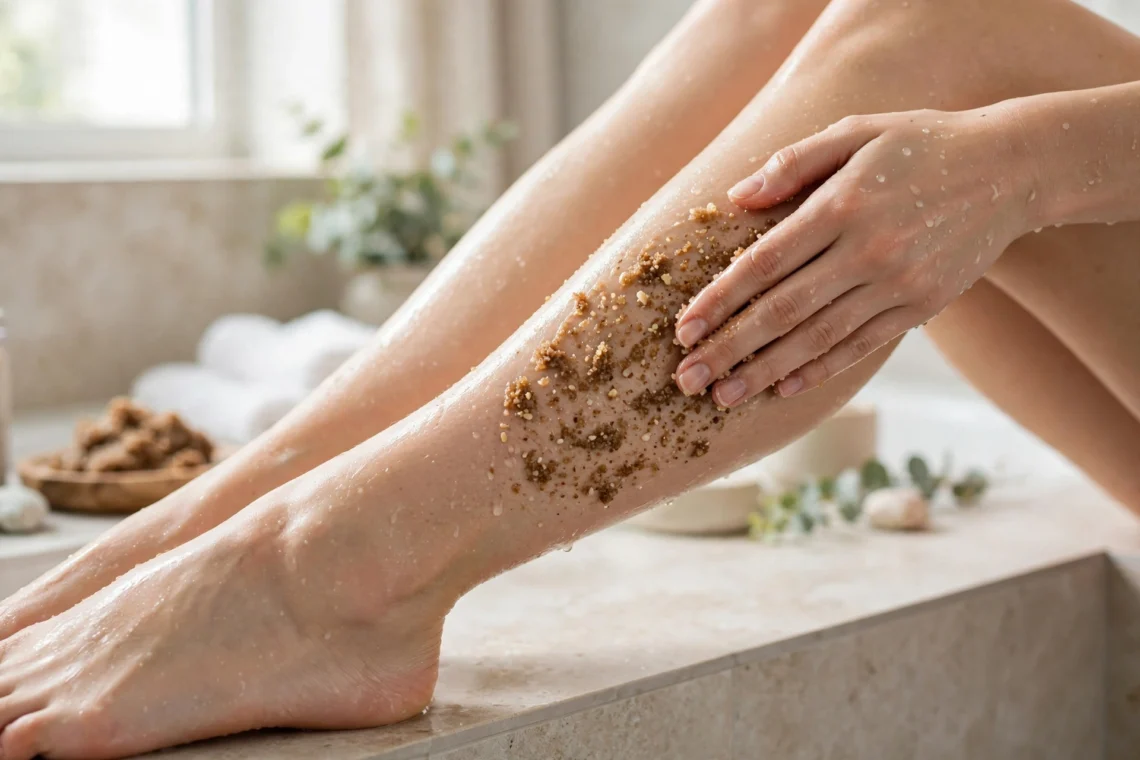
Exfoliation is the single most important step. By removing the layer of dead skin that traps debris in your follicles, you prevent the dark dots from forming in the first place. Use a gentle body scrub, an exfoliating mitt, or a soft dry brush two to three times per week. Work in light, circular motions and never scrub until your skin is red or raw — over-exfoliating strips the skin barrier and triggers more inflammation, which defeats the purpose.
2. Shave the Right Way
Your shaving technique matters enormously. Always shave at the end of your shower, when warm water has softened both the hair and the skin. Use a sharp, clean razor — replace blades regularly, and never share them. Apply a proper shaving cream or gel rather than soap, shave in the direction of hair growth to reduce irritation, and rinse the blade after every stroke. Store your razor in a dry place, because a damp blade dulls faster and harbors bacteria.
3. Try Chemical Exfoliants
Physical scrubs handle the surface, but chemical exfoliants work inside the follicle. Body lotions and washes containing glycolic acid, lactic acid, or salicylic acid dissolve the dead skin and oil that clog pores. Salicylic acid is oil-soluble, so it is particularly good at getting inside follicles. Start with a lower-strength product a few times a week and build up as your skin adjusts, and always follow with moisturizer.
4. Moisturize Every Single Day
Hydrated skin looks smoother, and the dots become far less noticeable when the surrounding skin is supple. Apply a rich body moisturizer or body oil within a few minutes of showering, while skin is still slightly damp, to lock in moisture. Look for formulas with ceramides, shea butter, or urea. For extra soothing after shaving, pure aloe vera gel is a wonderful lightweight option — you can learn more about aloe vera benefits for skin and why it calms irritation so well.
5. Consider Hair Removal Alternatives
Shaving is the biggest trigger for strawberry legs because it leaves the follicle open at the surface. Methods that remove hair from the root — such as waxing, sugaring, or epilating — let the follicle close fully, which often reduces the dotted appearance significantly. These methods require hair to grow out a little between sessions and can be uncomfortable at first, but many people find the trade-off worth it.
6. Soak Before You Shave
Never shave cold, dry legs. Spend at least five minutes in warm water before picking up the razor. The heat opens pores, softens hair, and makes the blade glide instead of tug. If you are in a hurry, press a warm, damp towel against your legs for a couple of minutes as a shortcut.
7. Stay Consistent
This is the step most people skip. Strawberry legs did not appear overnight, and they will not disappear overnight either. A consistent routine of gentle exfoliation, proper shaving, and daily moisturizing typically shows visible improvement within three to four weeks. Keep a simple routine you can actually maintain rather than chasing dramatic quick fixes.
Best Ingredients to Look For
When shopping for body care products to treat strawberry legs, check the label for these proven ingredients:
- Salicylic acid (BHA): oil-soluble exfoliant that clears inside the follicle
- Glycolic acid (AHA): dissolves dead skin on the surface for smoother texture
- Lactic acid (AHA): a gentler exfoliant that also hydrates
- Urea: softens rough, bumpy skin and helps other ingredients absorb
- Niacinamide: calms inflammation and supports an even skin tone
- Ceramides: rebuild the skin barrier so legs stay smooth between exfoliation days
Mistakes That Make Strawberry Legs Worse
- Dry shaving — the fastest route to irritation and ingrown hairs.
- Using an old, dull razor — replace blades as soon as they start dragging.
- Picking or squeezing the dots — this causes inflammation and can leave marks.
- Harsh, gritty scrubs used daily — over-exfoliation damages the barrier.
- Skipping moisturizer — dry skin makes every dot more visible.
- Very hot showers — hot water strips natural oils; stick to warm.
When to See a Dermatologist
Most cases of strawberry legs respond to the routine above. However, book an appointment with a dermatologist if the bumps are painful, spreading, filled with pus, or not improving after a couple of months of consistent care — those can be signs of an infection or a condition like keratosis pilaris that benefits from prescription treatment. A dermatologist can also discuss longer-term options such as laser hair removal, which reduces the hair itself and, with it, the dotted appearance. For a deeper overview of causes and treatments, Healthline’s guide to strawberry legs is a solid, medically reviewed reference.
Frequently Asked Questions
Are strawberry legs permanent?
No. They are a cosmetic appearance caused by clogged, open follicles, not a permanent skin change. With consistent exfoliation, proper shaving, and moisturizing, most people see clear improvement within a few weeks.
Can coconut oil get rid of strawberry legs?
Coconut oil can moisturize the skin, but on its own it does not unclog follicles. It works best as a moisturizing step after exfoliation, not as a standalone treatment.
Does laser hair removal fix strawberry legs?
It can help significantly, because it reduces the hair and lets follicles shrink. It is the most effective long-term option, though it requires multiple sessions and a professional provider.
How long does it take to see results?
With a consistent routine, most people notice smoother-looking legs within three to four weeks. Deeper discoloration can take longer to fade.
Are strawberry legs the same as keratosis pilaris?
Not exactly. Keratosis pilaris is a specific condition causing rough plugs in follicles, while strawberry legs describes the dotted appearance, which can have several causes. The two often overlap, and the treatments are similar.
Can men get strawberry legs?
Absolutely. Anyone who shaves their legs or has visible follicles can develop the dotted appearance, regardless of gender.







One comment on “How to Get Rid of Strawberry Legs: 7 Proven Steps”