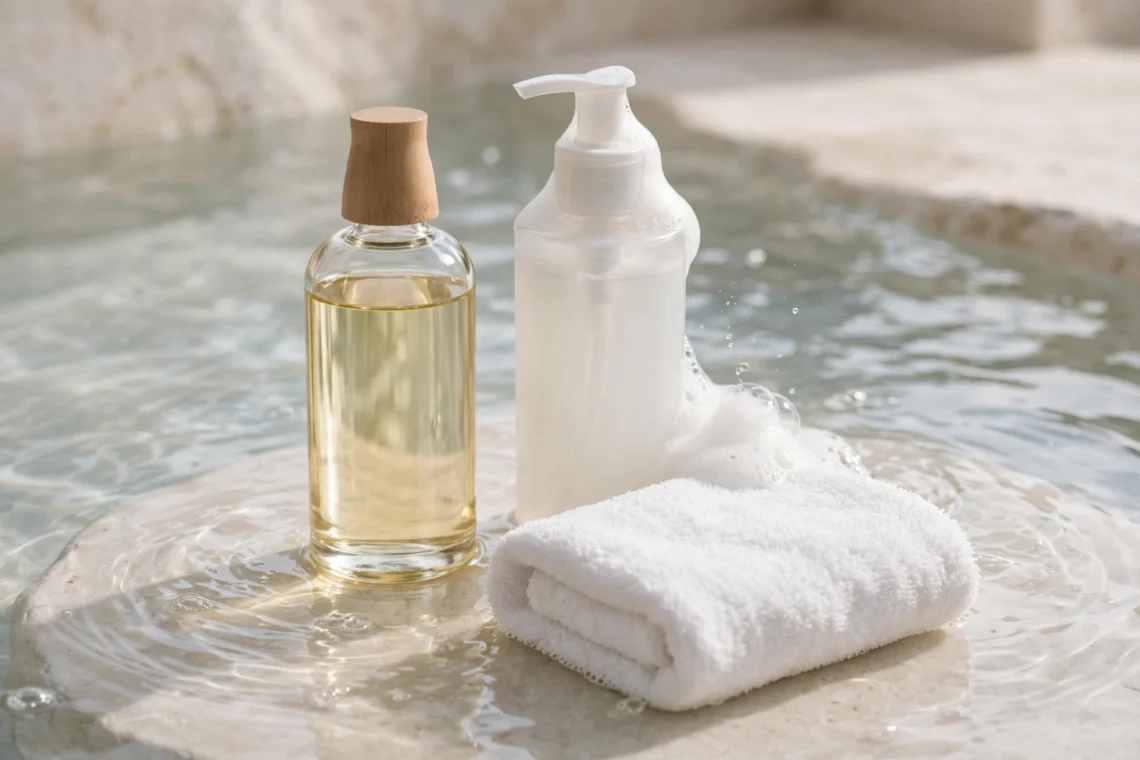
Double cleansing has traveled from Korean skincare routines to bathroom shelves around the world, and the hype is not entirely empty. The method is exactly what it sounds like: washing your face twice in one routine, but with two different types of cleanser instead of repeating the same one. The first step uses an oil-based cleanser to dissolve makeup, sunscreen, and excess sebum; the second step uses a water-based cleanser to wash away sweat, dirt, and any residue left behind. Each cleanser does the job it is best at, and together they leave the skin genuinely clean rather than just surface-rinsed.
Whether this extra step deserves a place in your routine depends on your skin type, what you put on your face during the day, and how your skin responds. This article explains how double cleansing works, the benefits people notice when they do it well, and the mistakes that turn a gentle routine into an irritating one.
What Is Double Cleansing, Exactly?
Double cleansing is a two-step evening routine. Step one is an oil-based cleanser — a cleansing oil, balm, or cream — massaged onto dry or slightly damp skin. Because like dissolves like, the oil-based formula melts through oil-soluble buildup: sunscreen (especially water-resistant formulas), foundation, waterproof eye makeup, excess sebum, and the film of pollution that settles on skin over the day. Step two is a water-based cleanser — a gel, foam, or gentle lotion — which removes water-soluble impurities such as sweat and dust, and clears away the residue the first cleanser leaves behind.
The order matters. If you reverse it, the water-based cleanser hits a wall of oil-based buildup and cannot reach the skin properly, and the oil cleanser applied second has nothing left to do. Oil first, then water, is the sequence that makes the chemistry work.
Double cleansing is generally an evening practice. In the morning, most skin has only accumulated a light layer of overnight sebum, and a single gentle wash or even a water rinse is enough for many people. Reserve the full two-step routine for the end of the day, when you are removing everything the day put on your face.
The Main Benefits of Double Cleansing
Removes sunscreen and makeup more completely
A single cleanser often struggles with the very products we are told to wear every day. Water-resistant sunscreen and long-wear makeup are formulated to resist water, which means a plain foaming cleanser may leave a surprising amount behind. The oil-based first step is specifically designed to break those formulas down, so the second cleanse starts from a truly clean surface instead of fighting through residue.
Helps prevent clogged pores and breakouts
When cleansing is incomplete, leftover sunscreen, sebum, and makeup mix with dead skin cells and settle into pores. Over time, that buildup can contribute to congestion, blackheads, and breakouts. A thorough two-step cleanse reduces what gets left behind in pores, which is one of the most commonly reported benefits of the method, especially for oily and acne-prone skin.
Improves absorption of serums and treatments
Skincare products can only work on skin they can reach. A film of residual sunscreen and sebum acts as a barrier between your serums, moisturizers, and treatments and your skin. By clearing that film completely, double cleansing gives the products you apply afterward a better chance to absorb and do their job. Many people notice their nighttime products seem to “work better” once their evening cleanse gets more thorough — not because the products changed, but because the delivery improved.
Cleans thoroughly without over-stripping
This benefit surprises people, but it is real when the products are chosen well. A single harsh cleanser often has to work aggressively to cut through a full day of buildup, which can leave skin tight and irritated. Splitting the job across two gentle steps means neither cleanser needs to be harsh. The oil step does the heavy dissolving without detergents, and the water step finishes with a mild formula, which can be kinder to the skin barrier than one strong scrub.
Can leave skin looking clearer and more radiant
Consistent, complete cleansing removes the dull layer of accumulated grime that can make skin look tired. People who double cleanse regularly often describe their skin as looking clearer and more even over a few weeks. This is a gradual, cumulative effect rather than an overnight transformation, and it pairs best with an otherwise consistent routine.
How to Double Cleanse: Step by Step
- Start with dry hands and a dry face. Apply the oil-based cleanser (oil, balm, or cream) directly to dry skin so it can dissolve makeup and sunscreen at full strength.
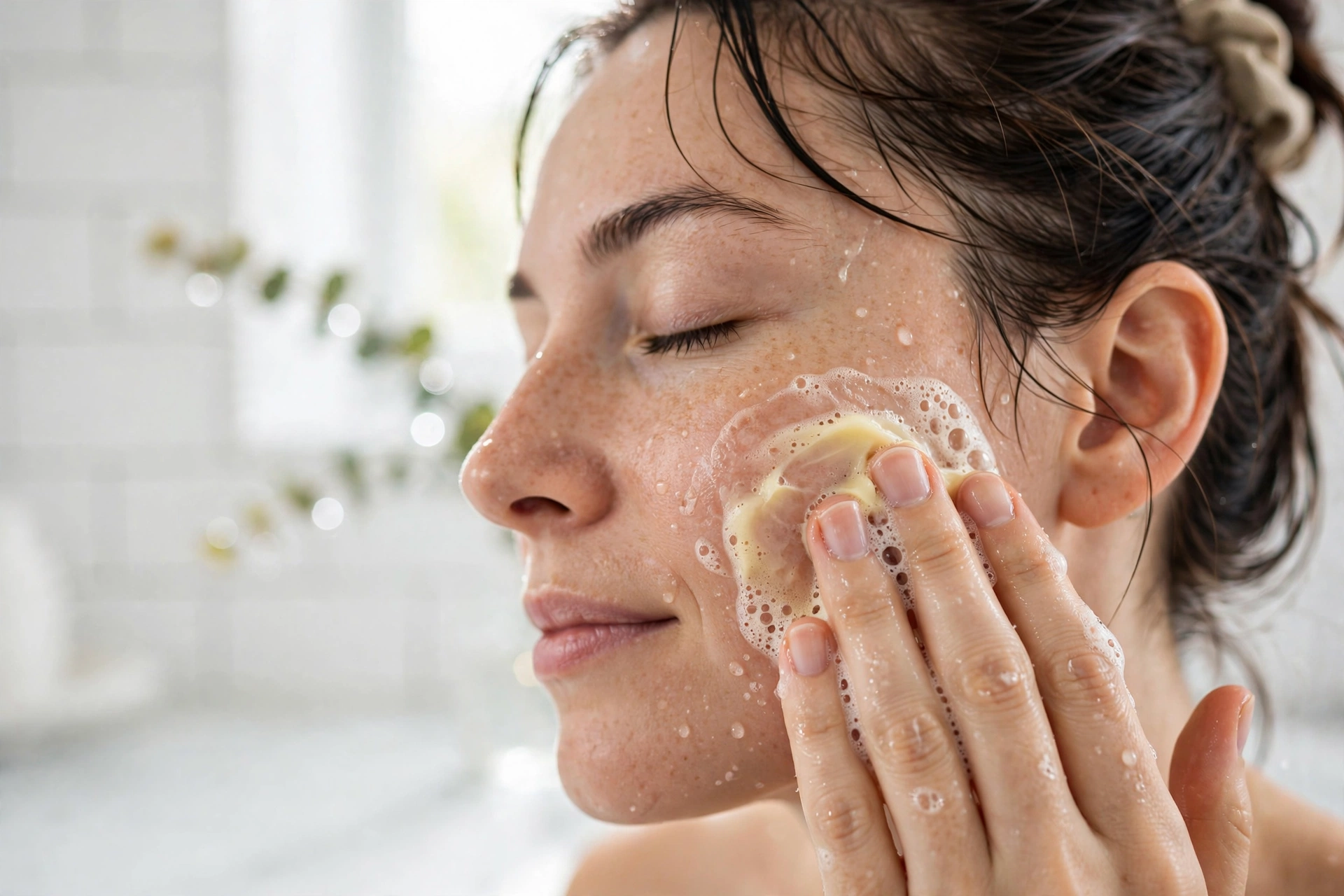
- Massage gently for 30 to 60 seconds. Use your fingertips in small circles across the whole face, including the hairline, jawline, and around the nose. Let the product do the work — no scrubbing needed.
- Add a little water and rinse. Most cleansing oils emulsify with water, turning milky as they lift the dissolved buildup off the skin. Rinse thoroughly with lukewarm water.
- Follow with the water-based cleanser. On damp skin, massage your gel, foam, or gentle lotion cleanser for another 30 to 60 seconds, then rinse completely.
- Pat dry and continue your routine. Use a clean, soft towel to pat (not rub) the skin dry, then apply toner, serums, and moisturizer while the skin is still slightly damp for best absorption.
The whole routine takes about two minutes. Use lukewarm water throughout — hot water strips the skin and can cause dryness and irritation.
Choosing the Right Cleansers for Your Skin Type
The method only works well if both cleansers suit your skin. A mismatch here is the most common reason double cleansing goes wrong.
- Oily or acne-prone skin: choose a lightweight, non-comedogenic cleansing oil or balm for step one so it does not add to congestion, and a gentle foaming or gel cleanser for step two. Some formulas include salicylic acid for extra pore-clearing help.
- Dry or sensitive skin: pick a rich, fragrance-free cleansing balm or cream for step one and a creamy, low-foam, hydrating cleanser for step two. Avoid harsh foaming agents and added fragrance.
- Combination skin: a balanced cleansing oil for step one and a gentle gel cleanser for step two usually works well; adjust based on how each zone of your face responds.
- Normal skin: most gentle formulas work. Choose based on texture preference and how your skin feels afterward — comfortable, never tight.
Across all skin types, fragrance-free and mild formulas carry the lowest risk of irritation. If you wear heavy eye makeup, consider whether your oil cleanser is safe and comfortable around the eyes, or remove eye makeup separately first.
Common Mistakes to Avoid
- Double cleansing in the morning too. Once a day, at night, is enough for most people. Morning skin has little to remove, and a second daily round risks over-cleansing.
- Using harsh formulas for either step. Strong detergents, high-pH soaps, or heavily fragranced cleansers can damage the barrier the routine is supposed to protect. Gentle is the whole point.
- Rubbing too hard. Excess pressure and tugging can irritate the skin, especially around the eyes. Let the cleansers dissolve buildup with time, not force.
- Not rinsing the first step fully. Leftover oil cleanser residue sitting under your second cleanser can itself clog pores. Rinse thoroughly between steps.
- Skipping moisturizer afterward. Even gentle cleansing removes some natural lipids, so follow up with moisturizer to lock in hydration. This applies to every cleanse, single or double.
- Assuming it suits everyone. Very dry or highly sensitive skin may not need or tolerate a nightly double cleanse. If tightness, redness, or flaking appears, scale back to a single gentle cleanse and see how the skin responds.
For more detail on what dermatology and skincare experts say about the method, including when it helps most and when to skip it, see Healthline’s look at double cleansing.
Double Cleansing and Your Overall Routine
Double cleansing fits naturally into a simple, consistent routine. Think of it as the foundation of your evening: once the day’s sunscreen, makeup, and buildup are fully removed, everything that follows works better. A practical nighttime sequence looks like this: double cleanse, then a hydrating toner or essence if you use one, then targeted serums, then moisturizer to seal everything in.
In the morning, keep things light: a gentle single cleanse or water rinse, a light moisturizer if needed, and sunscreen as the final step before you head out. If you are still deciding on daytime sun protection, our article on choosing the best sunscreen for oily skin covers lightweight, non-comedogenic options that pair well with a thorough evening cleanse. As with any routine change, give double cleansing two to three weeks of consistent use before judging the results — skin responds on a timeline of weeks, and the clearest benefits show up with patience.
Frequently Asked Questions
Do I need to double cleanse every day?
Most people only need it at night, on days when they wear sunscreen, makeup, or have had a particularly grimy day. If you go makeup-free and skip sunscreen, a single gentle cleanse is usually plenty. Adjust based on what you applied and how your skin feels.
Can double cleansing help with blackheads?
It can help reduce the buildup that contributes to clogged pores and blackhead formation, since the oil step dissolves sebum and the water step clears remaining debris. It is not a treatment that removes existing blackheads on its own, but consistent thorough cleansing is a sensible part of prevention.
Is double cleansing bad for dry or sensitive skin?
It is not inherently bad, but it carries more risk of over-cleansing for dry or sensitive skin. If you try it, use the gentlest possible formulas — a rich balm followed by a creamy, fragrance-free cleanser — and limit it to nights when you actually need the extra removal. Stop or scale back if you notice tightness, redness, or irritation.
Can I use micellar water as the first step?
Yes. Micellar water counts as a first cleanse for many people, since it lifts makeup and sunscreen before the water-based wash. Use a generous amount on a cotton pad, follow with your regular cleanser, and rinse well.
Should I double cleanse if I have eczema or rosacea?
Proceed with caution. Skin conditions like eczema and rosacea can be aggravated by extra cleansing steps or by products that disrupt the barrier. If you have a diagnosed skin condition, it is worth checking with a dermatologist before adding double cleansing to your routine.