If you have oily skin, sunscreen can feel like the trickiest step in your routine. The wrong formula leaves a greasy film, adds unwanted shine by midday, and can trigger clogged pores or breakouts. Because of that, many people with oily or acne-prone skin either skip sunscreen entirely or use it far less often than they should. That choice comes at a real cost: unprotected skin is exposed to ultraviolet damage every single day, including on cloudy days and indoors near windows, since UVA rays pass through glass and cloud cover year-round.
The good news is that sunscreen technology has moved far beyond the heavy, chalky creams of the past. Modern lightweight gels, fluids, and lotions can deliver reliable sun protection without the grease. Finding the best sunscreen for oily skin is mostly a matter of knowing which labels matter, which textures work, and how to apply the product so it stays comfortable all day. This guide walks through all of that, step by step.
Why Oily Skin Still Needs Daily Sunscreen
There is a persistent myth that oily skin is somehow protected from the sun because of its natural shine. It is not. Sebum is oil, not a UV filter, and it offers no meaningful protection against UVA or UVB radiation. Oily skin is just as vulnerable to sunburn, premature aging, dark spots, and skin cancer as any other skin type. In fact, people with oily, acne-prone skin often have an extra reason to be consistent with sunscreen: sun exposure can darken post-acne marks and make discoloration linger far longer than it otherwise would.
Dermatologists recommend daily use of a broad-spectrum sunscreen with an SPF of 30 or higher for all skin types, regardless of oiliness, skin tone, or the weather outside. That recommendation does not come with a carve-out for oily skin. Your skin simply produces more sebum than average; the sun treats it exactly the same as everyone else’s. A daily habit also matters because UV damage is cumulative. The brief minutes of exposure you get walking to your car, sitting near a window, or running errands add up over the years, quietly contributing to photoaging and increasing long-term risk.
If you have ever skipped sunscreen because it made your face look shiny or caused breakouts, the problem was almost certainly the formula, not the concept. The sections below explain how to find a sunscreen that feels like nothing once it sets, so wearing it daily stops feeling like a chore.
What to Look for in a Sunscreen for Oily Skin
Shopping for sunscreen is easier once you know the handful of terms that actually matter for oily skin. Keep this checklist handy the next time you compare products.
Look for “non-comedogenic” and “oil-free” on the label
This is the single most important thing for oily and acne-prone skin. Non-comedogenic means the formula is designed not to block pores, which is the main mechanism behind sunscreen-related breakouts. Dermatologist guidance consistently points oily skin toward products labeled non-comedogenic or “won’t clog pores,” ideally combined with an oil-free claim. Oil-free means the product does not contain added oils that would contribute to greasiness. A formula that is both oil-free and non-comedogenic is far less likely to turn into a breakout trigger.
Choose a lightweight texture: gel, fluid, or serum
Texture makes an enormous difference in comfort. Heavy creams tend to sit on oily skin and amplify shine, while gels, lightweight fluids, lotions, and serum-style sunscreens absorb quickly and feel weightless. Many people with oily skin find gel-based sunscreens especially comfortable because they sink in fast and leave a clean, dry-touch finish. Look for words like “lightweight,” “fluid,” “gel,” or “ultra-light” in the product description, and be skeptical of rich, thick, or “nourishing” creams marketed for dry skin.
Insist on broad-spectrum protection with SPF 30 or higher
The SPF number and the broad-spectrum label are the two non-negotiable protection criteria. Broad-spectrum means the sunscreen guards against both UVA rays, which drive photoaging and penetrate deeply, and UVB rays, which cause sunburn. An SPF of 30 or higher is the standard recommendation for daily use. One practical note: a well-formulated SPF 30 that you will happily wear every day protects you far better than an SPF 50 that feels so heavy you skip applications. Consistency beats the number on the label.
Mineral vs. chemical: which suits oily skin better?
Chemical (organic) sunscreens absorb UV rays using active ingredients such as avobenzone or octocrylene, and they tend to have lighter, more elegant textures that oily skin loves. Mineral (physical) sunscreens use zinc oxide or titanium dioxide to scatter and reflect UV rays; they are often preferred by people with sensitive or reactive skin, but traditional versions can feel heavier and leave a white cast. Modern tinted or sheer mineral formulas have improved a great deal. If you are prone to breakouts and want the lightest possible feel, a chemical or hybrid formula is usually the easiest starting point, while sensitive oily skin may do better with a sheer mineral option. Patch-testing any new formula for a few days is a sensible precaution.
Ingredients That Can Help Oily Skin
Beyond the core UV filters, a few supporting ingredients frequently show up in sunscreens designed for oily skin and are worth looking for:
- Niacinamide (vitamin B3): a popular skincare ingredient that can help the skin look calmer and less shiny while supporting an even-looking tone. Many sunscreens for blemish-prone skin include it.
- Silica or other oil-absorbing powders: these ingredients help absorb excess surface oil and give the formula a matte, velvety finish instead of a shiny one.
- Hyaluronic acid or glycerin: light humectants that provide hydration without heaviness. Even oily skin needs moisture, and dehydrated oily skin can actually look shinier as it overcompensates.
- Antioxidants such as vitamin E or green tea extract: extra defenses against environmental stress that pair well with UV protection.
Just as useful is knowing what to avoid. Very rich butters and oils high on the ingredient list, heavy fragrances, and thick occlusive waxes can all make oily skin feel uncomfortable and may increase the chance of clogged pores. Fragrance-free formulas are the safest bet if your skin is reactive as well as oily.
How to Apply Sunscreen for a Shine-Free Finish
Even the best formula can feel greasy if it is applied badly. Follow these steps for a comfortable, shine-controlled result:
- Start with clean, dry skin. Apply sunscreen as the last step of your morning routine, after moisturizer and before makeup.
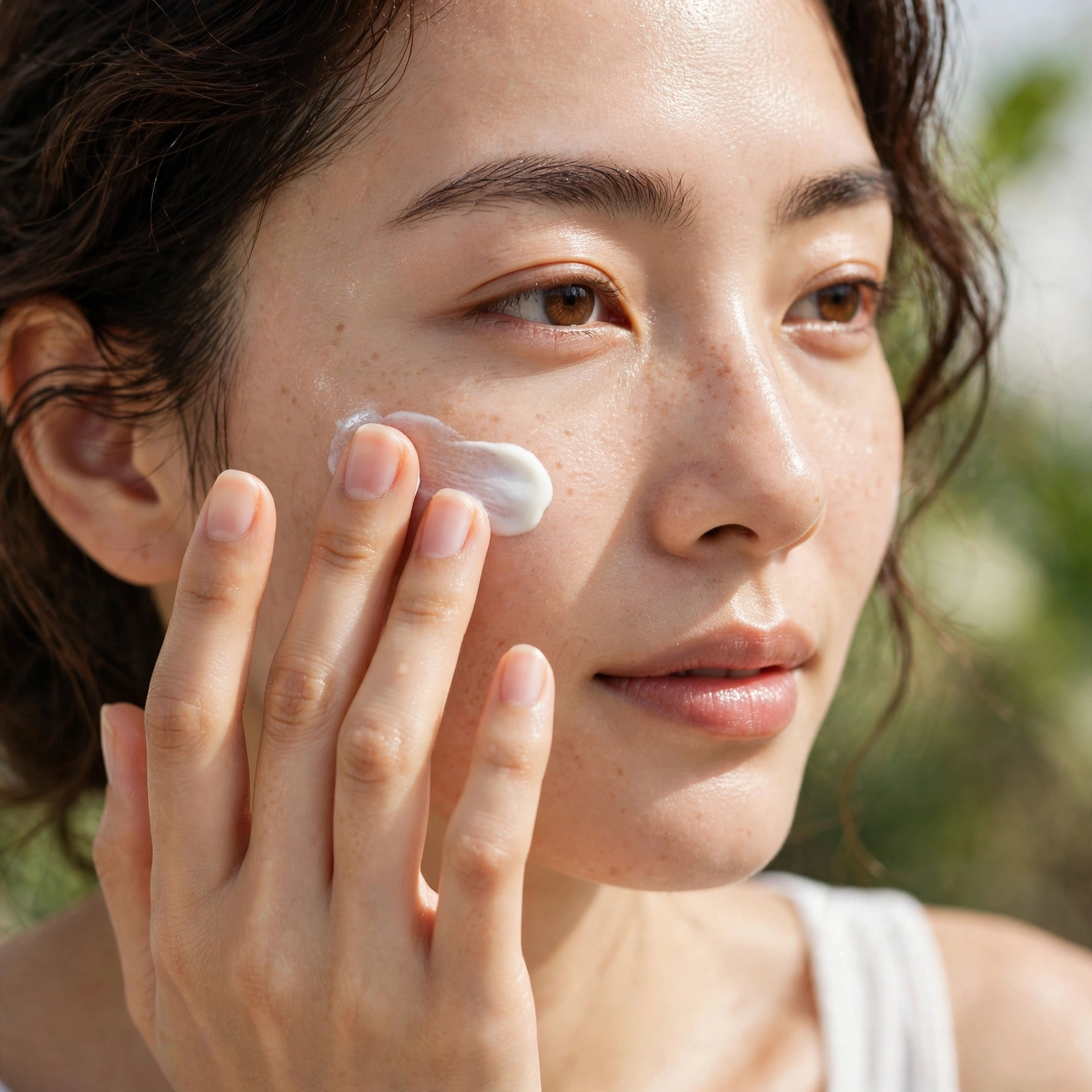
- Use enough product. Most people under-apply. A nickel-sized amount covers the face, neck, and ears for adequate protection.
- Let it set. Give the sunscreen a few minutes to absorb before applying makeup. Rushing this step is a common cause of pilling and midday shine.
- Blot, don’t layer. If shine appears during the day, press blotting paper or a tissue against the skin rather than adding more sunscreen on top. A light dusting of oil-absorbing powder can refresh the finish without extra product.
- Reapply every two hours outdoors. Reapplication matters most during extended sun exposure, and also after swimming or heavy sweating. A sunscreen stick or a lightweight fluid makes reapplying over makeup much easier.
Common Mistakes People With Oily Skin Make
- Skipping moisturizer and over-cleansing instead. Stripping the skin with harsh cleansers can prompt it to produce even more oil. A light gel moisturizer under sunscreen keeps the barrier balanced.
- Using body sunscreen on the face. Body formulas are usually thicker, more occlusive, and more likely to clog facial pores. Keep a dedicated facial sunscreen.
- Choosing a “matte” label and ignoring the rest. A matte finish helps with shine, but the formula still needs to be broad-spectrum, SPF 30 or higher, and non-comedogenic to actually do its job safely.
- Forgetting the ears, neck, and back of the hands. These areas show sun damage early and are frequently missed during a rushed morning routine.
- Treating sunscreen as optional on cloudy days. UV radiation passes through clouds and window glass, so daily use matters regardless of the weather.
For a deeper look at how different products compare across skin types and budgets, see Medical News Today’s sunscreen guide, which reviews formulations including options designed for oily and combination skin.
Sunscreen and the Rest of Your Routine
Sunscreen works best as part of a balanced routine, not as a standalone fix. At night, all that sunscreen and the day’s sebum need to come off properly, or residue can build up in pores overnight. That is why many people with oily skin pair their daytime SPF with a thorough evening cleanse, and our guide to double cleansing explains a two-step method designed to remove sunscreen completely without over-stripping. Keep the rest of your routine simple and consistent: a gentle cleanser, a light moisturizer, your sunscreen in the morning, and patience. Skin improves on a timeline of weeks, not days, so give any new sunscreen at least a few weeks of consistent use before judging the results.
Frequently Asked Questions
Can sunscreen cause breakouts on oily skin?
It can, but usually because of the formula rather than the UV filters themselves. Heavy, comedogenic, or oil-laden formulas can block pores and trigger breakouts. Choosing an oil-free, non-comedogenic sunscreen with a lightweight texture greatly reduces that risk.
Is a higher SPF always better for oily skin?
Not necessarily. What matters most is broad-spectrum coverage and consistent daily use. An SPF 30 you wear happily every day offers better real-world protection than a higher-SPF formula that feels so heavy you skip it.
Should I still wear sunscreen if I stay indoors?
Yes, in most cases. UVA rays pass through window glass, so skin near windows gets meaningful exposure during the day. If you spend your day away from windows, the risk is lower, but a daily habit is simpler to maintain than a case-by-case decision.
Can I use a moisturizer with SPF instead of sunscreen?
A moisturizer with SPF 30 or higher and broad-spectrum labeling can work for limited daily exposure, but most people apply moisturizer too thinly to reach the labeled SPF. For reliable protection, use it as a complement to a proper sunscreen, or make sure you apply a full nickel-sized amount.
How do I reapply sunscreen without ruining my makeup?
Stick sunscreens and lightweight sunscreen fluids glide over makeup without disturbing it. Alternatively, blot away excess oil first, then press a thin layer of a light fluid over the top. Setting the result with a little oil-absorbing powder keeps the finish matte.







One comment on “Best Sunscreen for Oily Skin: How to Choose a Shine-Free Formula”