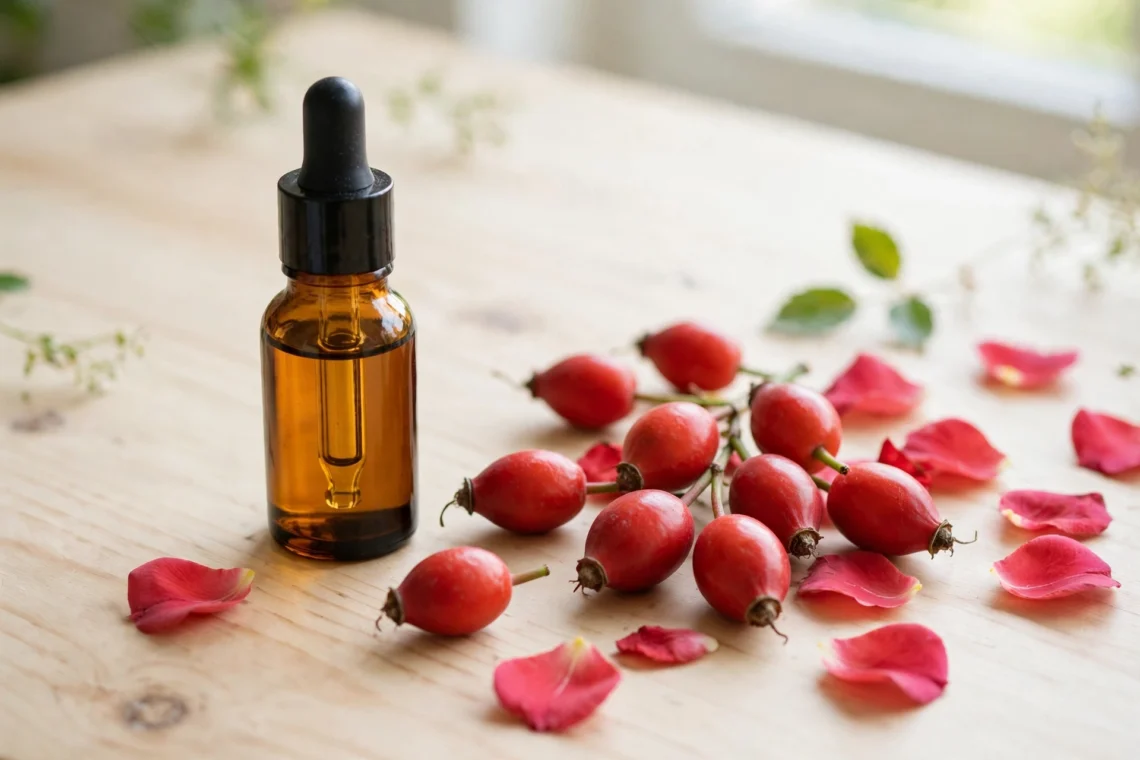
Rosehip oil has quietly become one of the most recommended plant-based facial oils, and it is easy to see why. It absorbs quickly, suits most skin types, and carries a gentle profile of vitamins and fatty acids that skin tends to love. Unlike heavier oils that sit on the surface, rosehip oil has a dry, lightweight texture that sinks in and leaves skin feeling soft rather than greasy. In this guide, we will walk through the benefits of rosehip oil for skin, how to use it in your routine, and practical tips for choosing and storing a good bottle.
As with any skincare ingredient, expectations should stay realistic. Rosehip oil is a supportive, nourishing oil — not a miracle treatment. Used consistently as part of a sensible routine, it can help skin look smoother, more even, and more comfortable. Let us look at what is inside the bottle and what it can do for your face.
What Is Rosehip Oil?
Rosehip oil is pressed from the seeds of the rosehip fruit — the small, reddish-orange fruits left behind on rose bushes after the flowers fade. Varieties like Rosa canina and Rosa rubiginosa are most commonly used for oil production. The oil has a golden to deep orange color and a light, slightly nutty scent.
It is important not to confuse rosehip oil with rose oil. Rose oil is an essential oil distilled from rose petals and is used in tiny amounts for fragrance. Rosehip oil is a carrier oil pressed from the seeds, and it can be applied directly to the skin in full-strength drops. When shopping, look for “rosehip seed oil” or “rosa canina seed oil” on the label to make sure you are getting the right product.
What Is Inside Rosehip Oil
Rosehip oil’s reputation rests on a genuinely interesting nutritional profile for skin. Here are its headline components.
- Essential fatty acids: Rich in linoleic acid and alpha-linolenic acid, which help support the skin’s moisture barrier and keep skin feeling supple.
- Vitamin A: A naturally occurring form that supports healthy skin cell turnover, which contributes to a smoother, brighter-looking surface over time.
- Vitamin C: An antioxidant that supports collagen production and helps skin defend against free-radical damage from the environment.
- Vitamin E and carotenoids: Antioxidant compounds that help protect skin from oxidative stress.
- Lycopene: Another antioxidant found in rosehips that research links to protection against skin-damaging free radicals.
One honest caveat: some vitamin C is lost during oil extraction, and vitamin C does not store well in oil form. You are still getting a nutrient-rich oil, but it is best viewed as a nourishing moisturizer rather than a vitamin C treatment. Some brands add extra vitamin C to their formulas for this reason.
Potential Benefits for Your Skin
Evidence for rosehip oil ranges from laboratory studies to long anecdotal use. Here is what the ingredient may offer, with an honest view of where the science stands.
Deep Yet Lightweight Hydration
The fatty acids in rosehip oil help skin hold on to water, which makes it a genuinely effective moisturizer despite its light feel. Unlike heavier oils, it absorbs without a greasy residue, so it works for people who normally avoid facial oils. It is particularly satisfying in dry or cold weather, when skin loses moisture faster than usual.
A Brighter, More Even Look
Thanks to its natural vitamin A content, rosehip oil encourages healthy skin cell turnover — the process by which old surface cells are replaced by fresh ones. Over weeks of regular use, this can help skin look brighter and more even in tone. People often pair it with gentle hydration layers underneath; for example, a water-based hydrator like aloe vera applied first can make a lovely base, as we describe in our guide to aloe vera for face.
Support for the Look of Fine Lines
Vitamin C supports collagen production, and collagen is what keeps skin looking firm and plump. While no oil can reverse deep wrinkles, the combination of hydration and antioxidant support can help fine lines look softer and less noticeable with consistent use. For a balanced view of the research, Healthline’s guide to rosehip oil benefits summarizes what studies have and have not shown.
Calms the Appearance of Redness
Rosehip oil’s fatty acids and polyphenols are associated with soothing properties, which is why it appears in formulas aimed at stressed or sensitive-looking skin. It will not replace medical treatment for conditions like rosacea or eczema, but as a daily moisturizer it can help skin look calmer and more comfortable.
A Friendly Option for Blemish-Prone Skin
Many facial oils are too heavy for blemish-prone skin, but rosehip oil is generally considered non-comedogenic — meaning it is unlikely to clog pores for most people. Its high linoleic acid content is notable because blemish-prone skin is sometimes low in linoleic acid in its natural sebum. A few drops at night can hydrate without the heavy, pore-clogging feel of richer oils.
How to Use Rosehip Oil in Your Routine
A little goes a long way with rosehip oil. Two to four drops are enough for the whole face, and application order matters more than quantity.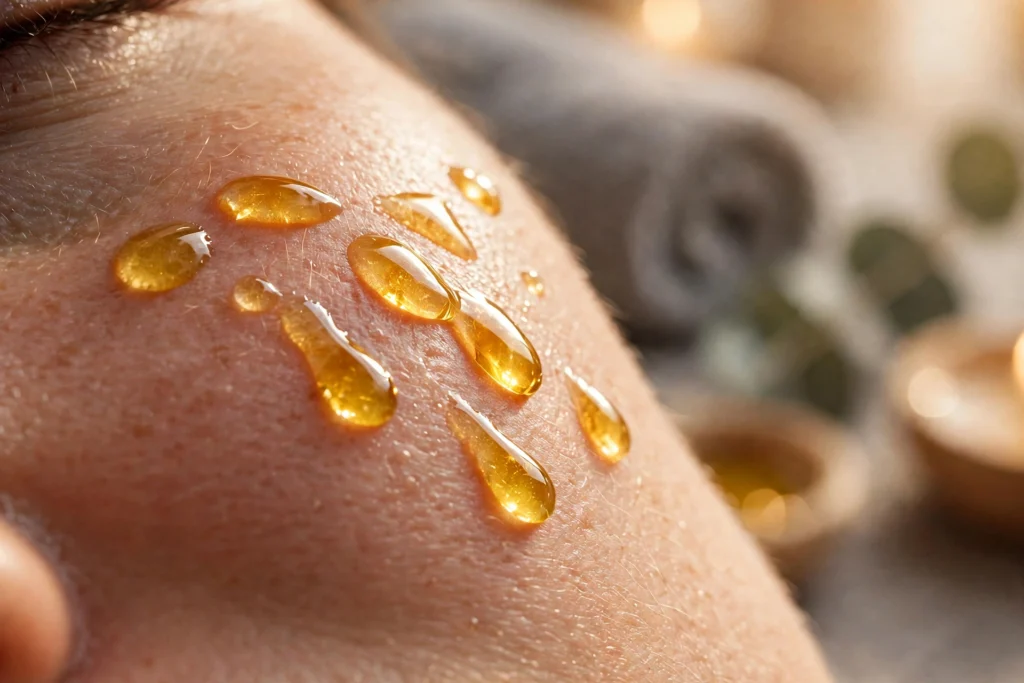
The Basic Method
- Cleanse and hydrate first. Apply rosehip oil after water-based products like toners or serums, while skin is still slightly damp.
- Warm the oil. Place two to three drops in your palms and rub your hands together for a few seconds to warm it.
- Press, don’t rub. Gently press the oil into your face and neck with open palms, using upward motions.
- Seal if needed. If your skin is very dry, follow with a cream on top to lock everything in.
- Use morning, night, or both. A common guideline is to apply it twice daily as a moisturizer, but even once nightly delivers results.
Morning Routine
In the morning, use one to two drops under your moisturizer and sunscreen. Rosehip oil is not a sunscreen and should never replace one, but it makes an excellent hydrating layer beneath SPF. If your sunscreen is already rich, you can skip the oil in the morning and save it for nighttime.
Nighttime Routine
Night is when rosehip oil really shines. After cleansing and any treatment serums, press two to four drops into the skin as your final step. Overnight, the oil supports the skin’s natural recovery while you sleep, and many people wake up to noticeably softer, calmer-looking skin.
Tips for Getting the Most From Your Bottle
- Choose cold-pressed oil: Cold pressing preserves more of the oil’s natural compounds than heat extraction. Look for “cold-pressed” and “unrefined” on the label.
- Check the color: Good rosehip oil is golden to deep orange. Very pale or nearly clear oil may be overly refined.
- Store it properly: Keep the bottle in a cool, dark place — refrigeration is ideal. Light and heat break the oil down faster.
- Watch the shelf life: Natural oils oxidize. Use your bottle within a few months of opening and discard it if the smell turns sharp or rancid.
- Start with a patch test: Apply a drop to your jawline or inner forearm and wait 24 hours before full-face use.
- Give it time: Skin cell turnover takes weeks. Judge results after a month or two of consistent use, not after three days.
Rosehip Oil for Different Skin Types
Dry Skin
Dry skin tends to love rosehip oil most. Layer it over a hydrating serum and seal with a cream for maximum comfort. During winter, you can mix a drop into your moisturizer for an extra-nourishing boost.
Oily and Combination Skin
It sounds counterintuitive, but light oils can work well for oily skin. Rosehip oil’s dry texture absorbs fast and does not add shine. Start with one to two drops at night only, and see how your skin responds before adding it to your mornings.
Sensitive Skin
Rosehip oil is generally well tolerated, but sensitive skin should still patch test. Choose a pure, fragrance-free oil with no added essential oils, which are a common source of irritation. Introduce it gradually — every other night at first.
Mature Skin
Mature skin often becomes drier and thinner with time, and rosehip oil’s combination of fatty acids and vitamins A and C makes it a popular choice here. Consistent nightly use supports hydration and the look of firmness, and it layers well with richer creams.
Common Mistakes to Avoid
- Using too much: More oil does not mean more benefit. Excess oil pills under makeup and wastes product. Two to three drops is the sweet spot.
- Applying it first: Oils go after water-based products, not before. Applying oil first can block serums from absorbing.
- Skipping sunscreen: Rosehip oil offers antioxidant support, not sun protection. Daily SPF is still non-negotiable.
- Buying refined, deodorized oil: Heavy refining strips color, scent, and nutrients. Unrefined, cold-pressed oil keeps the good stuff.
- Keeping it past its prime: Rancid oil can irritate skin. If it smells off or looks cloudy, replace the bottle.
Frequently Asked Questions
Can rosehip oil clog pores?
For most people, no. Rosehip oil is considered non-comedogenic and has a light, dry texture that absorbs quickly. As with any new product, introduce it gradually and watch for any new breakouts in the first week or two.
How long does it take to see results?
Hydration improvements often appear within the first week or two. Changes in tone, texture, and the look of fine lines take longer — most guides suggest judging after one to two months of consistent use, since that matches the skin’s natural renewal cycle.
Can I use rosehip oil with retinol or vitamin C serums?
Yes, with sensible layering. Apply water-based serums first, then press rosehip oil on top as a moisturizing layer. If your skin is sensitive, alternate strong actives on different nights rather than stacking everything at once.
Is rosehip oil safe during pregnancy?
Rosehip oil is not well-studied in pregnancy, so the cautious answer is to check with your doctor before use. Many people do use it, but professional guidance is the safest route for anything applied regularly during pregnancy or breastfeeding.
Can I use rosehip oil around my eyes?
A very small amount can be pressed gently around the orbital bone, but keep it away from the lash line and out of the eyes themselves. If your eye area is sensitive, test there last, after your face has tolerated the oil for a while.
The Bottom Line
Rosehip oil earns its reputation honestly: a lightweight, nutrient-rich oil that hydrates without heaviness and suits a wide range of skin types. Choose a cold-pressed, unrefined bottle, store it in the fridge, use two to three drops pressed into slightly damp skin, and give it a month or two to show what it can do. Paired with a simple, consistent routine, it is one of the easiest upgrades a skincare shelf can get.





One comment on “Rosehip Oil Benefits for Skin: Uses and Tips”