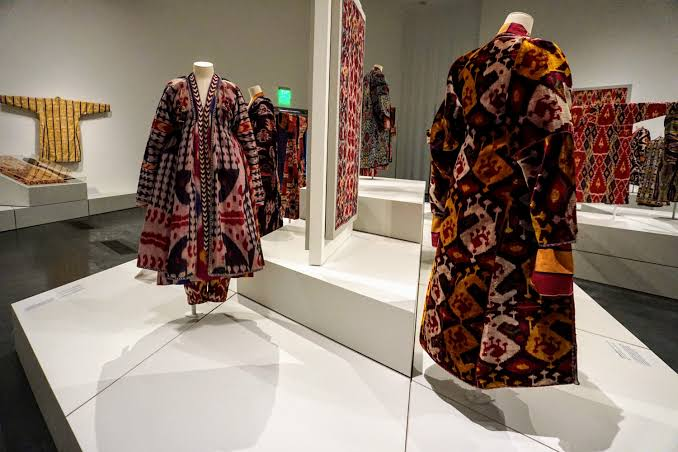
The world of Sumbanese ikat is one of breathtaking beauty, profound spiritual meaning, and immense human effort. Yet beyond the vibrant reds and deep indigos of the finished cloth lies a quiet story of struggle and resilience. As the modern world encroaches on this ancient island, the very knowledge and materials that sustain the tradition are under threat. The shift from hand-spun cotton to factory thread, the decline of natural dyeing, and the graying of the weaver population all point to a tradition in transition, raising a pressing question: can the soul of Sumba’s heritage be saved?
The Weaver’s Most Intimate Tool: The Backstrap Loom
At the heart of the process lies a tool of elegant simplicity: the backstrap loom. This ancient device, known locally as a gedogan, is central to the ikat tradition. It is not a large, fixed machine but a portable, low-tension loom where one end of the warp thread is tied to a fixed object, such as a house pillar or a tree, and the other end is attached to a strap worn around the weaver’s lower back. By simply leaning back, the weaver controls the tension of the entire cloth.
This intimate connection between the weaver’s body and her work allows for incredible portability; a woman can easily set up her loom under the shade of a tree or on her porch. More importantly, the backstrap loom enables the precise creation of the complex warp-ikat patterns for which Sumba is famous, a technique where the lengthwise threads are tie-dyed before weaving even begins. The process of setting up and using this loom is labor-intensive and requires years of practice to master, making it not just a tool, but an extension of the weaver’s own skill and patience.
The Fading Thread: From Hand-Spun Cotton to Factory Yarn
Traditionally, the journey of an ikat began not with purchased materials, but with the cultivation and hand-spinning of local cotton. This process, known as lamihi in the local language, is a crucial yet disappearing first step in the 42-stage journey of creating a single piece of cloth.
Sumba has its own varieties of cotton, which produce a unique, slightly irregular thread that, when woven, results in a textile of exceptional softness and strength. The shift from this organic, hand-spun cotton to industrially produced yarn is a quiet but fundamental change.
Weavers now often buy pre-spun cotton threads from traveling merchants, which are uniform and require less preparatory work. While more convenient, this change disrupts a deep-seated cultural connection. The act of spinning was not merely a chore but a meditative practice, a way for women to imbue the thread with their own energy and intentions. When the thread comes from a factory, however, the story it carries is no longer the weaver’s alone, but a generic product of global supply chains.
The Color of Time: The Loss of Natural Dyes
Perhaps the most visually striking aspect of Sumba ikat is its palette, earthy reds (kombu), deep indigos and blacks (wora), and rich browns from tree bark. These colors are not merely decorative; they are derived from an intimate knowledge of the island’s botany and a slow, alchemical process of fermentation, soaking, and oxidation.
However, the use of natural dye in ikat has decreased over time. Natural dyes are considered more difficult to make than synthetic dyes, and their long, unpredictable production process has led to their “low prestige” among some weaving craftsmen. In response, many weavers have switched to cheap, imported aniline dyes. These synthetic alternatives are faster, more predictable, and produce uniform, bright colors that appeal to tourists unfamiliar with the authentic hues. Yet, they lack the depth, complexity, and tonal variations that define a true masterpiece.
A study confirms this shift in perception, revealing that natural dyes are being increasingly sidelined in favor of more “practical” and “economical” options. This loss is twofold. Not only is the visual aesthetic of Sumba ikat changing, but the ancient knowledge of how to cultivate, harvest, and process these natural pigments is also at risk of being forgotten. This is not just a loss of color, but a loss of a profound scientific and spiritual relationship with the Sumbanese environment.
The Graying of the Loom: An Aging Craft
The most critical threat to the future of Sumba ikat is the age of its practitioners. A 2024 study, “Leveraging Indigenous Ikat Heritage for Creative Industry Growth,” provides stark data: a survey of 85 weavers reveals that only 22% of the weaving population is under the age of 35. This demographic imbalance signals a direct threat to intergenerational continuity. Many young people see weaving as slow, labor-intensive work with little financial reward compared to the opportunities available in urban areas.
The economic reality reinforces this reluctance. The same study found that 56% of weavers earn less than one million Indonesian rupiah (approximately $65 USD) per month, a sum that does not match the cultural and artistic value of their output. This economic pressure, coupled with the migration of young people seeking better wages, creates a dangerous cycle: the less profitable the craft, the fewer young people adopt it, further diminishing its future viability.
Furthermore, the market’s preference of East Sumbanese ikat with royal symbolism over ikat from West Sumba deter many Western weavers from expressing their unique identity freely, leading to a uniformity in the ikat scene.
Real Stories: Weavers on the Front Line
Despite these daunting challenges, powerful individuals and communities are fighting to keep the tradition alive. Their stories provide hope and inspiration.
Mama Dan: The Guardian of Natural Dyes
One of the most prominent figures in this struggle is Agustina Kahi Atanau, affectionately known as “Mama Dan” from the village of Lambanapu in East Sumba. Now in her late 60s, Mama Dan is a living legend and a fierce guardian of traditional, naturally dyed ikat. Despite suffering from cataracts that threatened her eyesight, she continued to motivate and teach her community, refusing to switch to cheaper, synthetic dyes.
Mama Dan’s dedication has made her village a stronghold of authentic natural dyeing. The weavers of her cooperative, Paluanda Lama Hamu, remain “serious and consistent” in using natural pigments, never once tempted to use synthetic alternatives. Crucially, Mama Dan is not just preserving the past; she is investing in the future by actively teaching young girls and women, ensuring there is a new generation to carry on her life’s work.
Padu Ata Ndima: A New Generation Learns
The story of Padu Ata Ndima from Kambatatana Village offers a more hopeful glimpse of the future. She was a participant in a recent 6-month training program aimed at reviving natural dyeing techniques in East Sumba. “This training is useful for those who weave and gain new knowledge about natural dyes,” she said. “Indeed, we are used to natural dyes. However, we can get insight into different natural dyes from this training… Thanks to BCA for organizing this training, so that in the future we can continue this spirit to achieve better results”. Her story shows that with the right support, even established weavers are eager to deepen their knowledge of traditional methods.
Inya Goro: Weaving as Living Memory
On the western side of the island, one can meet Inya Goro, a seasoned weaver from Lamboya. She eloquently describes her craft as a way of preserving stories and memories. “When I weave, I think of my mother and the patterns she taught me,” she says. “I think of the stories she told about the land and the spirits”. For her, weaving is not a business but a living meditation, a way to maintain a connection to her ancestors and her land. She represents the heart of the tradition that preservation efforts are fighting to protect.
Hana: Passing the Thread to the Next Generation
In a small village near Melolo in East Sumba, a weaver named Hana works alongside her daughter in a thatched communal weaving house. As Hana weaves, her daughter learns, not through formal lessons but through the osmosis of daily practice. This simple image, a mother and daughter working side-by-side, is the most fundamental form of preservation. Hana’s story is a quiet counterpoint to the demographic data, proving that the tradition’s survival depends on the strength of these family bonds.
Weaving a Future: Preservation Efforts
In response to the threats, a multifaceted preservation movement has emerged, involving local communities, NGOs, government bodies, and international organizations.
UNESCO Nomination
The most significant international recognition came in 2013 when Indonesia nominated “Tenun Ikat Sumba” for UNESCO’s List of Intangible Cultural Heritage in Need of Urgent Safeguarding. The UNESCO committee officially noted the threats: “The number of artisans has also dropped due to emigration. Consequently, transmission has decreased and few children now learn to make Tenun Ikat Sumba or understand the traditional cosmological beliefs or the symbolism of the animal and plant motifs”.
While the nomination process has been complex, the very act of applying has raised global awareness and galvanized local action. It has provided a framework for understanding the craft not just as a product, but as a living heritage requiring active protection.
Revival of Natural Dyes
Private sector initiatives are also playing a crucial role. In 2024, a program by Bakti BCA, the social responsibility arm of a major Indonesian bank, in partnership with the Indonesia Natural Dyes Association (WARLAMI), provided intensive natural dye training to 50 weavers from five villages in East Sumba. The program aimed to “restore the tradition of naturally dyed traditional fabrics” and to remind weavers of the higher market value of their naturally dyed work.
The global market supports this approach. Research shows that products using natural dyes can command market prices up to five times higher than their synthetic counterparts. By reconnecting weavers with the economic potential of their heritage, these programs create a powerful incentive for change.
Cultural Schools and Youth Engagement
On the ground, local governments are taking action. In West Sumba, a strategy has been to establish cultural schools where the younger generation can learn about ikat weaving alongside traditional dances, music, and language. This holistic approach frames weaving not as an isolated skill but as part of a vibrant cultural identity.
Other initiatives focus on direct youth engagement. In the village of Tanatuku, a group of young women who had dropped out of school formed a weaving collective called Kawara Panamung. Their commitment to preserving their local culture is a powerful example of grassroots youth-led action. Similarly, an empowering community called Kandunu, started by a young woman named Timoria, produces ikat to both empower women and raise awareness about the risks of illegal migration, showing how weaving can address multiple social challenges.
Conclusion: A Future Woven by Hand
The future of Sumba ikat hangs in a delicate balance. The threads of hand-spun cotton are unraveling, the vibrant palette of natural dyes is fading, and the hands that weave the stories are growing older. Yet, as the stories of Mama Dan, Padu Ata Ndima, Hana, and others show, there is a powerful will to preserve this heritage.
The solution lies not in freezing the craft in time, but in supporting its sustainable evolution. This means investing in training programs, creating fair market access, and celebrating the unique, irreplaceable value of a textile made by hand, with natural materials, and infused with a millennium of cultural memory. The greatest threat to Sumba ikat is not a lack of skill, but a lack of appreciation for the immense time and knowledge it embodies. As Inya Goro reminds us, when we support these weavers, we are not just buying a piece of fabric; we are helping to preserve a living, breathing connection to the past, woven one thread at a time.