If your skin flushes at the slightest provocation — a new serum, a gust of cold wind, even a warm shower — you are not alone. Millions of people live with reactive, easily irritated skin, and choosing the best skincare products for sensitive skin routine can feel like defusing a bomb. One wrong ingredient can trigger redness, stinging, itching, or a full flare-up that takes days to calm down.
The good news? Dermatologists say you don’t need a 10-step routine or a luxury budget to care for sensitive skin. In fact, simpler is almost always better. A sensitive skin routine built around a few well-chosen, fragrance-free, barrier-supporting products will outperform a shelf full of trendy actives every time.
This guide walks you through the dermatologist-backed product types that form the backbone of a reliable sensitive skin routine, the ingredients to embrace, the ones to avoid, and how to introduce new products without drama. Think of it as general skincare information — not personalized medical advice — and see a dermatologist if your sensitivity comes with persistent rashes, eczema, or rosacea.
What Actually Counts as Sensitive Skin?
Sensitive skin isn’t a single medical diagnosis. It’s a description of skin that reacts easily to things that shouldn’t bother it: burning after applying a new product, redness from temperature changes, itching from fragranced laundry detergent, or breakouts after touching your face with unwashed hands.
According to dermatology specialists, people with sensitive skin often have an underlying condition such as eczema, rosacea, or allergic contact dermatitis — or simply a skin barrier that lets irritants in more easily than it should. The common thread is a compromised moisture barrier: the outermost layer of skin that is supposed to lock hydration in and keep irritants out.
That’s why the best skincare products for sensitive skin routine all share one goal: protect and rebuild the barrier while minimizing exposure to common irritants. Every recommendation below follows that principle.
The Core Products: What Your Sensitive Skin Routine Really Needs
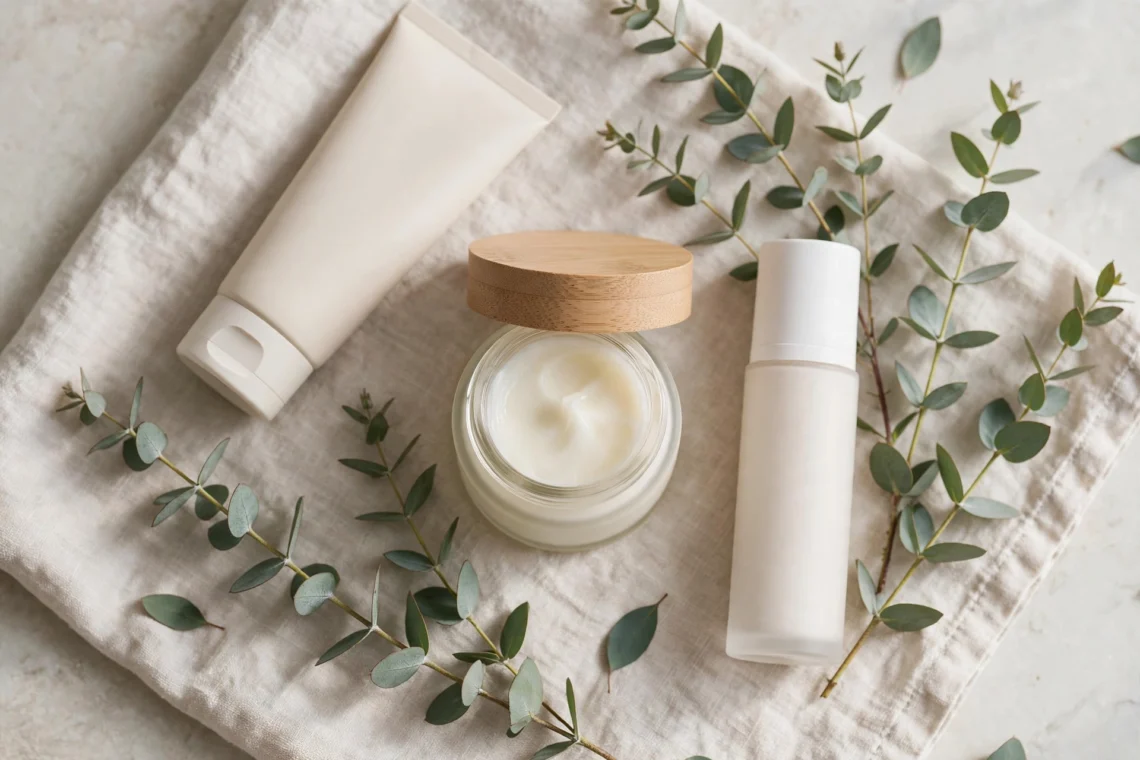
Dermatologists agree that a sensitive skin routine only needs three non-negotiable steps: a gentle cleanser, a fragrance-free moisturizer, and daily sunscreen. Everything else is optional — and for sensitive skin, optional should be treated with suspicion until proven otherwise.
1. A Gentle, Non-Foaming Cleanser
Your cleanser sets the tone for everything that follows. Harsh surfactants — especially sulfates like sodium lauryl sulfate — can strip the natural oils that hold your barrier together, leaving skin tight, squeaky, and vulnerable.
Look for a non-foaming or lightly foaming cleanser with a creamy or lotion-like texture. Dermatologist-favorite formulas from brands like CeraVe and Cetaphil have built their reputations on mild, soap-free, pH-balanced cleansing that removes dirt, sunscreen, and light makeup without stripping. Key features to seek:
- Labeled “fragrance-free” (not just “unscented” — unscented products can still contain masking fragrance)
- Contains ceramides or glycerin to support the barrier during washing
- Rinses clean without leaving skin feeling tight or dry
- Free of harsh sulfates, essential oils, and drying alcohols
Use lukewarm water, massage gently for about 30–60 seconds, and pat — never rub — your face dry with a clean towel.
2. A Fragrance-Free Moisturizer With Barrier Ingredients
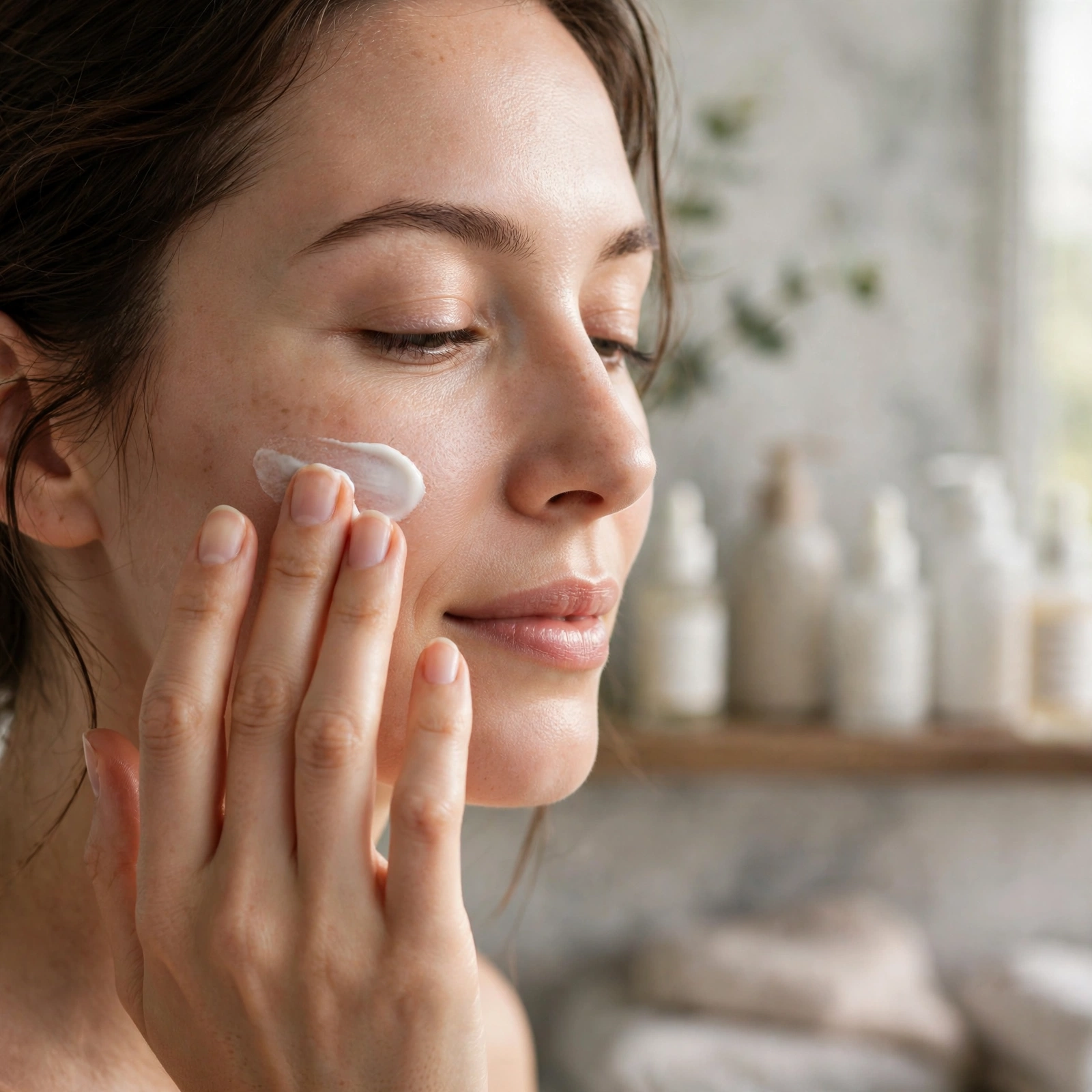
Moisturizer is arguably the most important product in any sensitive skin routine. Dermatologists often recommend applying it to slightly damp skin, within a minute or two of washing, to trap existing moisture before it evaporates.
The best moisturizers for sensitive skin are rich in barrier-repairing ingredients such as:
- Ceramides — lipids that help hold skin cells together and seal in moisture; a hallmark of dermatologist-developed brands like CeraVe
- Hyaluronic acid — a humectant that draws water into the skin
- Glycerin — a gentle humectant that supports hydration without irritation
- Colloidal oatmeal — recognized for its soothing properties on irritated skin; a signature ingredient in Aveeno formulations
- Petrolatum or dimethicone — occlusive ingredients that lock moisture in
Brands like Vanicream have earned dermatologist trust specifically because their formulas skip fragrance, dyes, lanolin, parabens, and other common irritants while delivering serious hydration. If your skin is very dry or reactive, a cream or ointment texture generally protects better than a light lotion.
3. A Mineral Sunscreen
Daily sunscreen is non-negotiable — UV exposure triggers inflammation, redness, and long-term damage, and it can worsen conditions like rosacea that often travel with sensitive skin. But chemical sunscreen filters (oxybenzone, avobenzone, octinoxate) are a common source of stinging and irritation.
Most dermatologists steer sensitive skin toward mineral (physical) sunscreens with zinc oxide and/or titanium dioxide as the active ingredients. These sit on top of the skin and reflect UV rays rather than absorbing them, which generally makes them less irritating. Look for:
- Broad-spectrum protection with SPF 30 or higher
- “Fragrance-free” and ideally “for sensitive skin” on the label
- A lightweight, non-comedogenic formula so it layers comfortably under moisturizer
Mineral formulas used to leave a noticeable white cast, but newer formulations from brands like EltaMD and La Roche-Posay blend in far better while staying gentle. Reapply every two hours when you’re outdoors.
4. Optional: A Soothing Treatment Step
If your three basics are working and you want to target redness or dullness, one carefully chosen serum can help — introduced slowly. Look for niacinamide (vitamin B3) in low concentrations (around 2–5%), which many dermatologists note can support the barrier and calm redness without the irritation risk of stronger actives. Centella asiatica (cica) and aloe-based formulas are also popular gentle options.
Introduce any new product one at a time, patch-test on your jawline or behind your ear for a day or two, and wait at least a week before adding anything else. Slow and boring wins the race with sensitive skin.
Ingredients Sensitive Skin Should Avoid
Not every “clean” or “natural” ingredient is gentle. Dermatology specialists commonly advise sensitive skin to steer clear of:
- Fragrance and parfum — including in products labeled “natural” or “botanical”; the number-one cause of cosmetic skin reactions
- Drying alcohols (denatured alcohol, SD alcohol) — can strip the barrier and trigger stinging
- Harsh exfoliating acids at high strengths — glycolic acid, strong salicylic acid peels, and aggressive scrubs can overwhelm reactive skin
- Benzoyl peroxide — effective for acne but often too irritating for sensitive skin
- Essential oils — tea tree, lavender, citrus oils, and similar “natural” fragrances are frequent irritants
- Retinoids at full strength — wonderful for many, but sensitive skin usually needs the lowest concentrations, introduced very gradually, if at all
A good habit: read the first five ingredients on any label. If fragrance or alcohol appears early in the list, put the product back.
How to Build Your Sensitive Skin Routine: The Right Order
Product order matters because it affects how well each layer absorbs and performs. For a simple sensitive skin routine, follow this sequence:
- Cleanse — gentle cleanser, lukewarm water, morning and night
- Treat (optional) — a single soothing serum, if your skin tolerates one
- Moisturize — apply to damp skin to lock in hydration
- Protect (morning only) — mineral sunscreen SPF 30+ as the final step
Keep the routine consistent for at least four to six weeks before judging results. Barrier repair is slow, and switching products frequently is one of the fastest ways to keep sensitive skin irritated. If you’re also dealing with excess oil in certain areas, you may find it helpful to read our guide to morning skincare routine for oily skin steps — the layering principles are the same, even though the product textures differ.
For a deeper explanation of how skin type shapes product choice, Cleveland Clinic dermatology specialists offer skin care routine guidance for every skin type, including sensitive skin.
Tips for Shopping Smart
- “Hypoallergenic” is a starting point, not a guarantee. The term isn’t strictly regulated, so always check the full ingredient list.
- Patch-test everything. A dab behind the ear or along the jawline, waited 24–48 hours, saves your whole face from a bad reaction.
- Change one product at a time. If a flare happens, you’ll know the culprit.
- Sample sizes are your friend. Many dermatologist-loved brands offer travel or trial sizes — use them.
- Watch your environment too. Fragranced laundry detergent, fabric softener, and even heavily scented hand soap can sabotage an otherwise perfect routine, since they touch your face via pillowcases and hands.
Frequently Asked Questions
What is the best skincare routine for sensitive skin?
Dermatologists generally recommend a simple three-step routine: a gentle fragrance-free cleanser, a barrier-supporting moisturizer applied to damp skin, and daily mineral sunscreen SPF 30+. Additional products should be added one at a time and only if your skin tolerates them.
Should sensitive skin use CeraVe or Cetaphil?
Both brands are frequently recommended by dermatologists for sensitive skin because their formulas are typically fragrance-free, non-comedogenic, and built around barrier ingredients like ceramides. Which one suits you better often comes down to texture preference — try a small size of each and see how your skin responds.
Is mineral sunscreen better than chemical sunscreen for sensitive skin?
In general, yes. Mineral sunscreens use zinc oxide and/or titanium dioxide, which sit on the skin’s surface and reflect UV rays, while chemical filters absorb UV and can cause stinging or irritation in reactive skin. Dermatologists most often recommend mineral formulas for sensitive skin.
Can sensitive skin use niacinamide?
Many dermatologists consider low-concentration niacinamide (around 2–5%) suitable for sensitive skin, since it can support the barrier and reduce redness. Higher concentrations (10%+) may cause flushing or tingling in very reactive skin, so start low and patch-test.
How do I know if a product is irritating my skin?
Signs of irritation include burning or stinging on application, new redness, itching, tightness, or small bumps appearing within hours to days of use. If a new product causes these, stop using it, return to your basic routine, and reintroduce products one at a time once your skin calms down.
Does sensitive skin need exfoliation?
Gentle, infrequent exfoliation can help some sensitive skin types, but it’s optional and easy to overdo. If you try it, choose a mild formula (such as a low-strength lactic acid or polyhydroxy acid product), use it no more than once a week to start, and stop immediately if you notice redness or stinging.
Conclusion
Building the best skincare products for sensitive skin routine comes down to a few steady principles: keep it simple, keep it fragrance-free, protect the barrier, and introduce anything new slowly. A gentle cleanser, a ceramide-rich moisturizer, and a mineral sunscreen form a complete routine that dermatologists stand behind — and for most sensitive skin, that’s genuinely enough.
Remember that this guide offers general information, not personalized medical advice. If your sensitivity includes persistent rashes, swelling, or conditions like eczema or rosacea that don’t improve with gentle care, a board-certified dermatologist can help you build a plan tailored to your skin.