A day in strong sun can leave your face looking noticeably darker than the rest of your body — an uneven tan that makeup struggles to hide. The good news is that a tan is not permanent: it fades naturally as your skin renews itself. The even better news is that a few safe, consistent habits can help it fade more evenly and keep it from coming back. This guide explains how to remove tan from your face the safe way, without harsh bleaching or risky home experiments.
Why Does the Face Tan Faster?
Your face is exposed to the sun more than almost any other part of your body. Every time you step outside — even on cloudy days or for short errands — ultraviolet rays hit your forehead, nose, and cheeks. UV light triggers your skin to produce melanin, the pigment that darkens skin as a natural defense. That darkening is what we call a tan. Because facial skin is also thinner and more reactive than body skin, it tends to show uneven tanning, dark patches, and sun spots more easily.
Step 1: Stop More Tanning First
This is the step most people skip, and it is the most important one. No tan-fading routine works if you keep getting new sun exposure every day.
- Apply broad-spectrum sunscreen every morning. Choose SPF 30 or higher and apply it generously to your face, ears, and neck. Reapply every two hours when outdoors, and after sweating or swimming.
- Seek shade during peak hours. The sun’s rays are strongest between late morning and mid-afternoon, so plan outdoor time accordingly when you can.
- Wear a wide-brimmed hat and sunglasses. Physical barriers protect your face far more effectively than sunscreen alone.
- Do not skip cloudy days. UV rays pass through clouds, so daily sun protection matters year-round.
Dermatologists consistently emphasize these habits — see the American Academy of Dermatology’s sun-protection recommendations for the full guidance from board-certified experts.
Step 2: Exfoliate Gently to Speed Up Fading
A tan sits in the upper layers of your skin. Gentle exfoliation helps remove tanned, dead skin cells so fresher skin shows through faster. The key word is gentle — scrubbing hard irritates your skin and can make pigmentation worse.
Chemical exfoliants
Products with mild alpha hydroxy acids (AHAs) such as lactic acid or mandelic acid dissolve the bonds between dead skin cells. Used once or twice a week, they can gradually even out a tan. Start with a low concentration and always patch-test on a small area first.
Physical exfoliation
A soft washcloth or a mild facial scrub used very lightly can help, but avoid anything gritty or abrasive on tanned skin. If your skin feels raw or tight afterward, you are exfoliating too often or too hard.
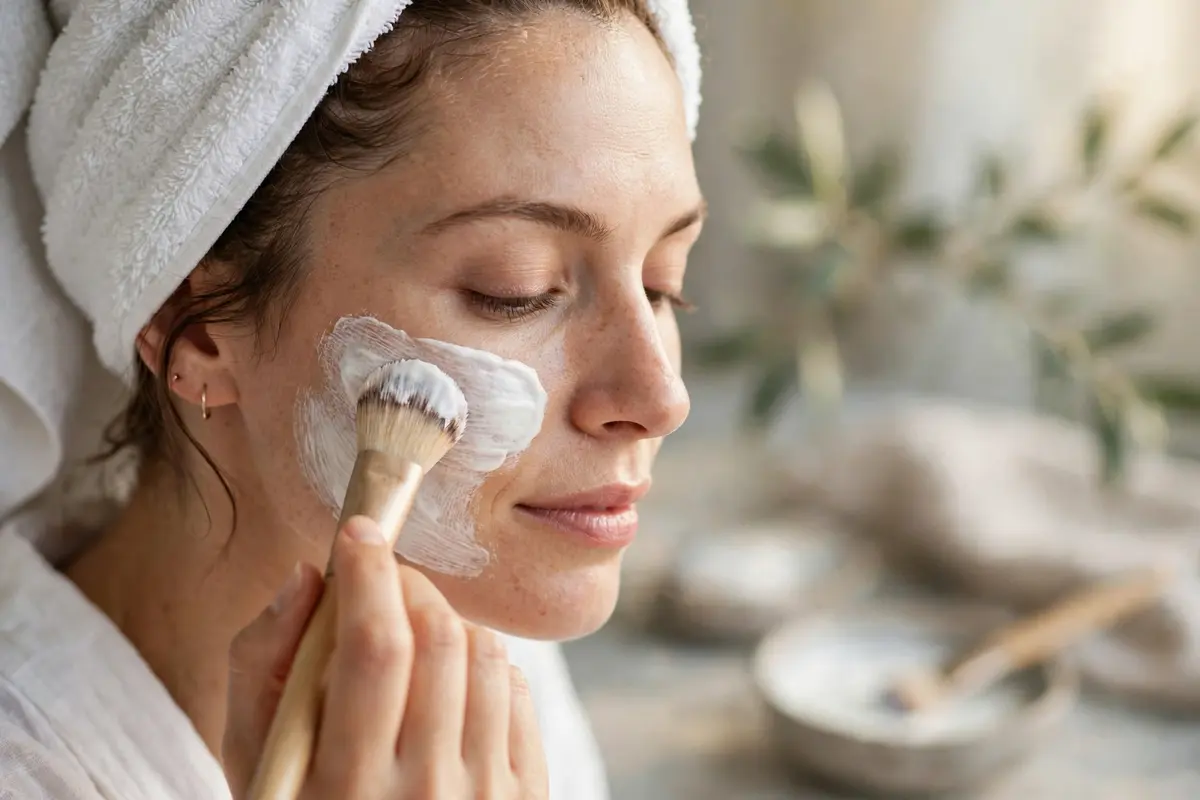
Step 3: Add Brightening Ingredients
Certain skincare ingredients are known for helping to even out skin tone over time. Look for these in serums or moisturizers:
- Vitamin C: An antioxidant that helps brighten dull skin and even out tone with consistent use.
- Niacinamide: A form of vitamin B3 that supports an even complexion and strengthens the skin barrier.
- Aloe vera: Soothes sun-exposed skin and helps keep it calm while it recovers.
- Licorice extract: A plant-derived ingredient often used in brightening formulas.
Introduce one new product at a time so you can tell what your skin likes. Brightening products take weeks of consistent use to show results — there is no safe overnight fix.
Step 4: Keep Your Skin Hydrated
Well-hydrated skin renews itself more efficiently. After sun exposure, your skin’s moisture barrier is often compromised, which slows recovery and makes uneven tone more visible. Use a gentle cleanser, follow with a hydrating serum or toner, and lock it in with a moisturizer suited to your skin type. Drinking enough water throughout the day supports overall skin health too.
Gentle Home Remedies Worth Trying
Some traditional kitchen ingredients can complement your routine, as long as you use them carefully:
- Yogurt or curd masks: The lactic acid in yogurt provides very mild exfoliation. Apply plain yogurt for 10–15 minutes, then rinse.
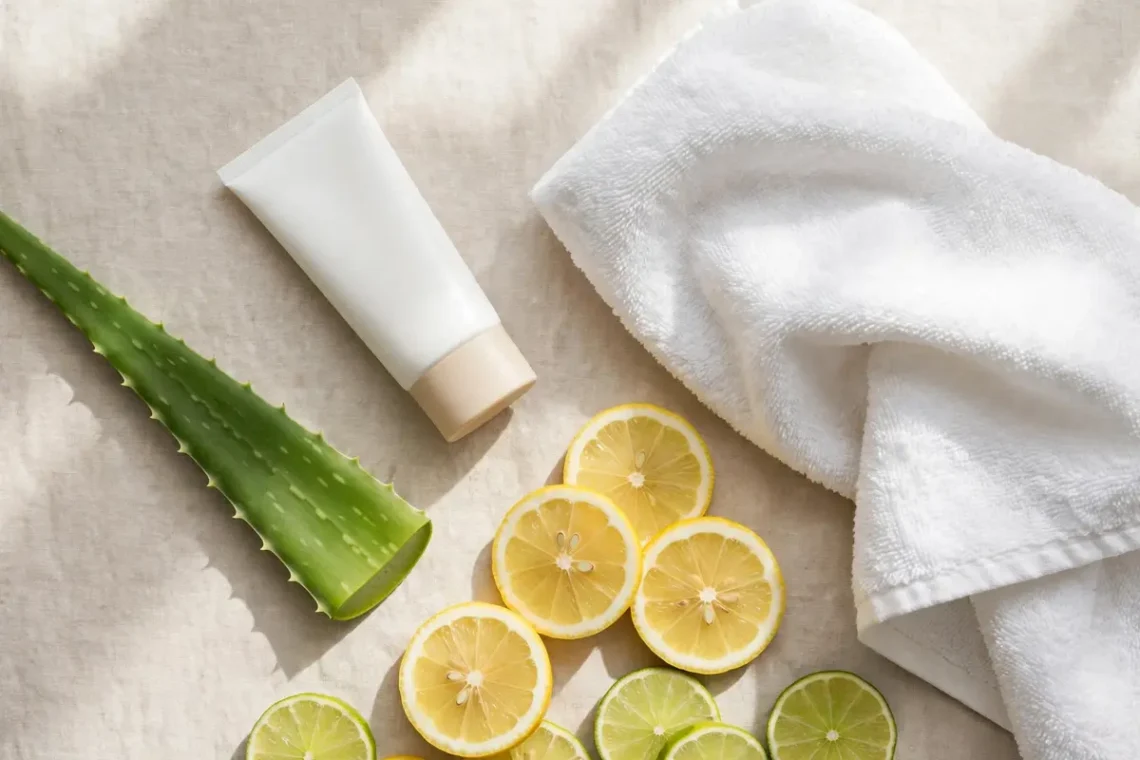
- Aloe vera gel: Fresh or store-bought gel soothes the skin and supports recovery after sun exposure.
- Cucumber: Cooling and hydrating, good for calming sun-stressed skin.
Be cautious with lemon juice and other acidic ingredients — they can irritate skin and actually worsen pigmentation when exposed to sunlight. Never apply anything to broken or sunburned skin, and always patch-test first.
What to Avoid
- Skin-bleaching creams without guidance: Products with strong lightening agents can cause irritation, uneven lightening, or rebound darkening. Consult a dermatologist before using them.
- Harsh scrubs and loofahs on the face: Over-exfoliation damages the barrier and can deepen pigmentation.
- Tanning beds: They deliver concentrated UV radiation and increase the risk of skin cancer and premature aging.
- Expecting instant results: Safe tan fading is gradual. Anything promising dramatic overnight whitening is a red flag.
A Simple Daily Routine for Fading Tan
- Morning: Gentle cleanser → vitamin C or niacinamide serum → moisturizer → broad-spectrum SPF 30+ sunscreen.
- Evening: Gentle cleanser → hydrating toner or serum → moisturizer. (Add a mild AHA exfoliant 1–2 nights per week instead of the serum.)
- Weekly: A soothing mask with aloe or yogurt for extra recovery support.
When to See a Dermatologist
If your tan is accompanied by persistent dark patches, if discoloration is spreading, or if home care has not helped after several weeks of consistent sun protection, see a board-certified dermatologist. They can assess whether the pigmentation is simple tanning or something like melasma or post-inflammatory hyperpigmentation, and recommend appropriate treatments such as professional peels or prescription options.
For more on ingredients that support healthy, even-looking skin, read our guide to peptides for skin benefits.
Frequently Asked Questions
How long does it take to remove a tan from the face?
It varies by skin type and how deep the tan is, but with daily sun protection and gentle exfoliation, most people notice visible fading within a few weeks. Deeper pigmentation can take a couple of months.
Can sunscreen remove an existing tan?
Sunscreen does not remove a tan, but it prevents new tanning so your existing tan can fade naturally. Without it, you keep re-tanning and the cycle never ends.
Is exfoliation safe for tanned skin?
Yes, if it is gentle. Mild chemical exfoliants used once or twice a week help remove tanned surface cells. Avoid harsh scrubs, which can irritate skin and worsen pigmentation.
Does vitamin C help fade tan?
Vitamin C is an antioxidant that supports a brighter, more even complexion with consistent use over several weeks. It works best alongside daily sunscreen.
Are home remedies like lemon effective?
Some mild options like yogurt or aloe vera can soothe and gently exfoliate, but acidic ingredients like lemon can irritate skin and worsen pigmentation in sunlight. Patch-test everything and avoid the sun after using them.
When should I see a dermatologist about tanning?
See a dermatologist if discoloration persists despite sun protection, if dark patches are spreading or uneven, or if you want professional options like chemical peels for stubborn pigmentation.





One comment on “How to Remove Tan From Face: Safe Ways to Fade Sun Tan”