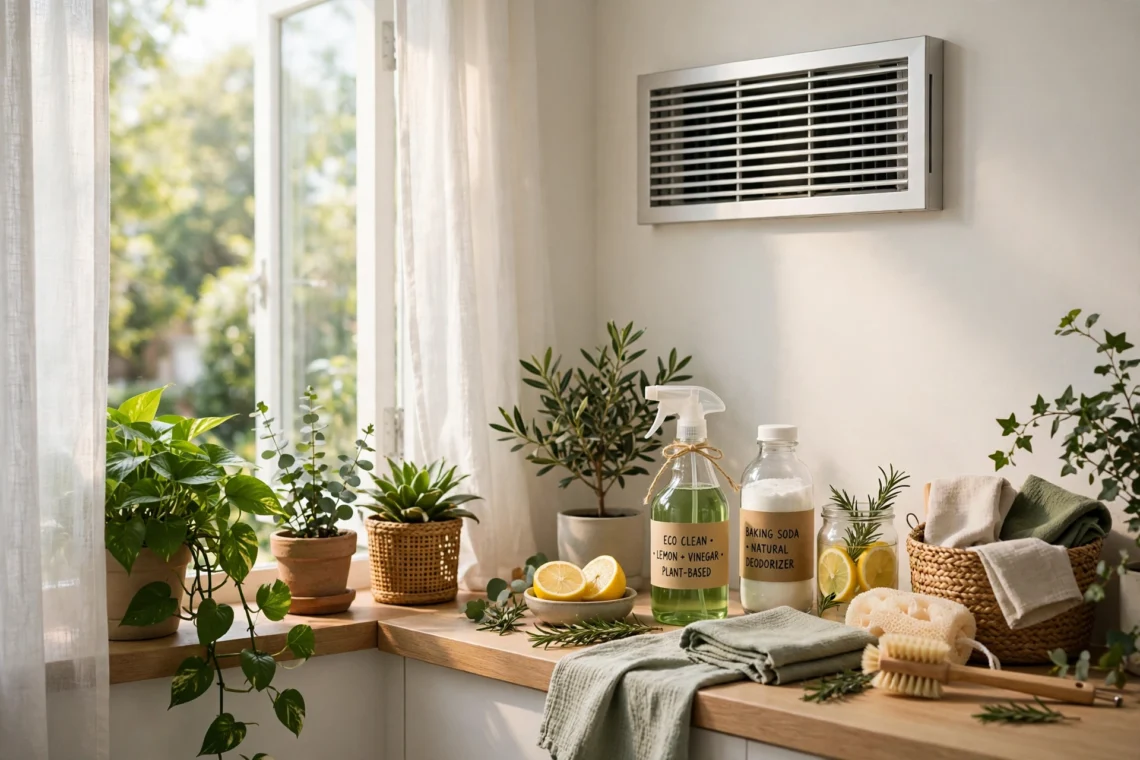
Eco-friendly air duct cleaning is an approach to HVAC maintenance that focuses on removing dust, debris, and other contaminants from ductwork using physical methods and safer products whenever possible. Instead of relying on harsh chemicals, this approach emphasizes mechanical cleaning, controlled vacuuming, and careful inspection. For homeowners looking for an air duct cleaning service that takes a gentler approach, eco-friendly methods offer a practical way to maintain cleaner ductwork without introducing unnecessary chemical residues into the home.
What Is Eco-Friendly Air Duct Cleaning?
Traditional duct cleaning may involve chemical biocides, sealants, or fragranced products designed to kill microbes or mask odors. These products can leave residues inside the duct system and may be circulated through the home when the HVAC system runs.
Eco-friendly cleaning takes a different path. It uses methods such as high-powered vacuums, rotary brushes, and compressed air to physically remove accumulated dust and debris. When a product is needed, it is typically a plant-based or low-toxicity option, used only when necessary and in accordance with safety guidelines.
The goal is not to sterilize the ducts but to reduce the material that accumulates over time. This distinction matters because the U.S. Environmental Protection Agency (EPA) recommends cleaning ducts only when necessary, and advises against routine chemical treatments.
Five Benefits of Non-Toxic Air Duct Cleaning Methods
Choosing a non-toxic method offers several advantages, particularly for households with children, pets, or individuals with sensitivities to strong chemicals. The benefits below explain why many homeowners are moving toward chemical-free duct cleaning.
1. Less Reliance on Unnecessary Chemical Treatments
Many conventional duct cleaning services use chemical sprays even when there is no confirmed contamination. Eco-friendly providers focus first on physical removal, which means fewer chemicals are introduced into your home’s air supply.
As the EPA notes, duct cleaning has not been shown to prevent health problems, and chemical treatments should not be used routinely. By reducing reliance on unnecessary chemicals, eco-friendly cleaning avoids adding potential irritants to indoor air.
2. Reduced Introduction of Added Fragrances
Air fresheners, scented sprays, and fragranced sealants are sometimes used to make ductwork smell clean. However, these products can introduce volatile organic compounds (VOCs) and synthetic fragrances into the air.
Eco-friendly duct cleaning avoids added fragrances, helping to keep indoor air free from unnecessary scent chemicals. This is especially helpful for people with asthma, allergies, or fragrance sensitivities.
3. Effective Physical Removal of Dust and Debris
Dust, pet hair, construction debris, and other particles can accumulate in ductwork over time. Mechanical methods, such as brushing and vacuuming, are effective at removing this material without relying on chemical agents.
According to the EPA’s guidance on duct cleaning, physical removal methods are often the most practical way to clean ducts. Rotating brushes loosen debris from duct walls, while powerful vacuums capture it before it can recirculate through the home.
4. A More Considered Approach to Indoor Air Quality
While duct cleaning alone does not guarantee better health outcomes, reducing dust and debris in the system can contribute to a more considered approach to indoor air quality. Clean ductwork, combined with regular filter changes and HVAC maintenance, helps limit the amount of material moving through the system.
An EPA guide to indoor air facts notes that indoor air can be more polluted than outdoor air, with sources including dust, pet dander, and other particles that accumulate indoors. Keeping ducts clean is one part of a broader indoor air quality strategy.
5. Greater Attention to Environmental Responsibility
Eco-friendly cleaning also supports environmental responsibility. Traditional chemical treatments can produce waste and residues that enter the air or water systems. Non-toxic methods reduce this impact by relying on physical cleaning techniques and minimizing the use of synthetic chemicals.
In addition, many eco-friendly providers use energy-efficient equipment and sustainable practices, such as using reusable tools and avoiding single-use plastic coverings. This approach aligns with a broader commitment to reducing environmental harm while maintaining a clean home.
Eco-Friendly Cleaning Methods Compared
Understanding the differences between common eco-friendly methods can help you choose the right approach for your home. Each method has its strengths and is suited to different situations.
| Cleaning method | Primary purpose | Important consideration |
|---|---|---|
| Mechanical brushing and vacuuming | Removes dust and debris from duct surfaces | Best for routine cleaning and general maintenance |
| Negative-pressure vacuuming | Captures loosened debris before it spreads | Requires specialized equipment to maintain suction |
| Compressed air cleaning | Dislodges debris from hard-to-reach areas | Should be combined with vacuuming to capture debris |
| Plant-based cleaning solutions | Provides a low-toxicity option when cleaning agents are needed | Only use products approved for HVAC use |
| Inspection cameras | Allows visual confirmation of duct condition before and after cleaning | Helps verify the cleaning was thorough |
No single method is suitable for every situation. Effective service depends on the contamination identified, the HVAC system’s construction, and the cleaning equipment used.
How to Choose an Eco-Friendly Air Duct Cleaning Service in Boston
When comparing providers, look beyond advertising claims. A reliable service provider should explain the proposed cleaning process, inspect accessible system components, and provide a clear estimate before work begins.
For eco-friendly air duct cleaning Boston homeowners can evaluate, ask these questions:
- Does the service rely primarily on mechanical cleaning and controlled vacuum collection?
- Are chemical sprays, disinfectants, or fragrances included in the quoted price?
- Can the provider explain why any proposed treatment is necessary?
- Will the technician protect furniture, flooring, and occupied areas from dust?
- Will the provider show evidence of contamination and explain any recommended repairs?
Be cautious of claims that duct cleaning automatically eliminates harmful microorganisms, prevents illness, or guarantees lower energy bills. The EPA does not recommend routine duct cleaning for every household because the overall benefits remain uncertain in many circumstances.
If visible mold is suspected, identify and correct the moisture source. Wet or contaminated porous duct insulation may require replacement rather than simply being sprayed or cleaned.
Make a More Informed Choice With Affordable Air Duct & Dryer Vent Cleaning
Cleaner ductwork starts with an appropriate cleaning method, clear communication, and an understanding of what your HVAC system actually needs. Choosing a chemical-conscious approach helps ensure that your home’s air system is maintained without unnecessary exposure to harsh products.
For homeowners seeking a balanced, non-toxic approach, professional guidance can make the decision easier. Providers that emphasize mechanical cleaning, transparency, and careful inspection offer a more thoughtful way to care for ductwork.
Visit Affordable Air Duct & Dryer Vent Cleaning to learn more about eco-friendly duct cleaning options available in the Boston area.