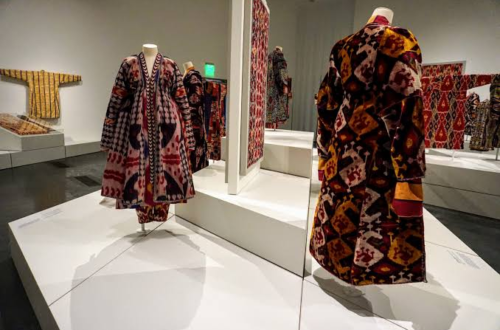
Archival photograph of Pakistani women wearing Farshi Shalwars (1970s). The Farshi Shalwar (also called Farshi Pajama) is a traditional South Asian women’s garment distinguished by its floor-sweeping, wide-legged silhouette. It originated in the Mughal era (16th–19th centuries) and became especially popular among royal and aristocratic women in the courts of Awadh (Oudh) and Lucknow. The term farshi comes from the Persian farsh, meaning “floor,” reflecting how the trousers trail dramatically behind the wearer. Historically it was worn as part of a three-piece ensemble (a long kurta or shirt, an embroidered dupatta, and the Farshi Shalwar) and often paired with a short or long kurti, creating an unmistakable mark of grandeur and status.
Design
The Farshi Shalwar is essentially a very wide, pleated pant that flares out from the waist and kisses the floor. Unlike ordinary straight or narrow pants, its excess length (traditionally 9–15 yards of fabric) lets it form a cascading train when spread out. This voluminous flare gives a royal, gown-like effect. According to fashion experts, it is “a garment that flares at the bottom… a dramatic, sweeping silhouette”. The waistband is drawn tight with a drawstring, and as the wearer walks she often gathers the extra fabric in one hand to keep the train from tangling. Fabrics are typically rich silks, brocades, chiffon or organza, often richly embroidered with gold or silver thread (zari, zardozi, etc.) and embellishments. In modern interpretations, lighter fabrics and prints are also used to create a similar effect.
The Farshi Shalwar is traditionally worn with a long, embroidered kurta (tunic) and a heavy dupatta or stole. Historic images and descriptions note it paired with embroidered kurtas and flowing dupattas, often in brocade or Banarasi silk. This full outfit – heavily influenced by Persian and Central Asian court fashions – was crafted to cover the head and torso modestly while allowing the dramatic pants to billow below. In sum, the key design features are extra-wide, pleated legs that trail on the floor (the “farsh”), luxurious fabrics, and intricate ornamentation.
Cultural Significance
The Farshi Shalwar has long been associated with aristocracy, nobility and ceremonial occasions. In 18th–19th century Awadh and Mughal courts (in present-day Uttar Pradesh and Punjab), it was a signature garment of royal ladies and elite Begums. Contemporary sources note it was “favoured by royal and aristocratic women” and seen as a “marker of status and refinement”. For example, the Nawabi courts of Awadh celebrated the Farshi Shalwar as a sign of elegance – its use of over ten meters of fabric and lavish embellishment literally symbolized wealth and privilege.
Because of its extravagance, the Farshi Shalwar was never everyday wear but reserved for formal events, court functions and weddings. It appears in classical dance costumes and period films depicting Mughal-era Lucknow, highlighting its cultural cachet. In traditional circles, wearing a Farshi Shalwar even today evokes a sense of heritage and grandeur. As one fashion commentator observes, it “carries stories from the past” and speaks to a culture’s history of craftsmanship and luxury.
Modern Trends
Today the Farshi Shalwar is experiencing a high-profile revival. Designers in Pakistan, India and beyond are reintroducing it with contemporary twists. South Asian fashion labels like Zara Shahjahan, Hussain Rehar, Faiza Saqlain and others have showcased modern Farshi Shalwar sets on the runway and in bridal collections. In recent Eid and wedding seasons, this garment has been trending: stylists report that the Farshi Shalwar became the “hottest trend” in Pakistan around Ramadan/Eid 2025, with collections featuring it and celebrities embracing the look. Its reappearance has been fueled by television and film as well – historical dramas and fashion shoots have prominently featured Farshi ensembles, sparking nostalgia-driven interest.
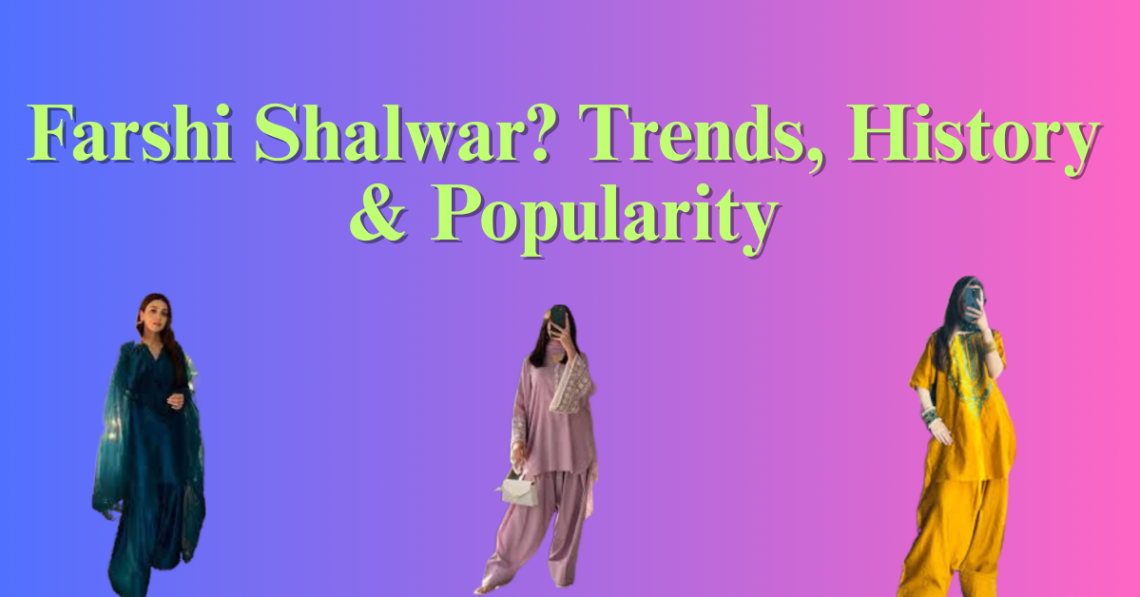
Pakistani models wearing contemporary Farshi Shalwar designs (collage from Sadaf Kanwal Fashion, 2025). These modern interpretations keep the hallmark flared, floor-length pants but often use lighter organza, chiffon or printed fabrics for ease of wear. The silhouettes are sometimes streamlined – paired with shorter kurtas or jackets – but still retain the traditional volume. Even menswear has embraced the Farshi: Pakistani actors and hosts like Fahad Mustafa and Falak Shabbir have been seen on TV donning Farshi pajama looks, signaling a new gender-fluid trend. Fashion influencers on social media and diaspora communities abroad are also promoting the Farshi Shalwar, combining it with global style influences to connect with cultural roots. In short, while its shape is antique, the Farshi Shalwar is reimagined today with modern cuts, fabrics and minimal embroidery to suit contemporary tastes.
Popularity
The Farshi Shalwar’s renewed popularity spans designers, celebrities, and cultural events. Celebrities from both India and Pakistan have been spotted in it – for example, Bollywood stars Karisma Kapoor and Khushi Kapoor, as well as Pakistani actresses Hania Aamir and Ayeza Khan, have been seen sporting Farshi Salwar sets in recent festive seasons. High-end boutiques and bridal shops now list Farshi Shalwar outfits alongside lehengas and ghararas. Major fashion weeks and advertising campaigns have featured it: in 2025, Pakistani boutiques released Farshi collections timed with Eid, and Indian media highlighted it as an “It” ethnic piece for the season.
The trend is especially visible at weddings and festivals. At bridal events and mehndi (henna) ceremonies, brides are increasingly choosing Farshi Shalwar ensembles for their elegance and heritage appeal. Social media hashtags and TikTok videos show brides in flowing Farshi ghararas paired with ornate dupattas. According to fashion experts, this revival also reflects a “slow fashion” movement – a generation valuing traditional craftsmanship and nostalgic styles. Even outside South Asia, Farshi Shalwar is gaining fans: South Asian communities in the USA and UK wear it at cultural celebrations to honor their heritage.
In essence, the Farshi Shalwar has moved from the archives into the mainstream of ethnic fashion. Its blend of regal history and contemporary chic makes it popular among designers and trendsetters. Today it stands as a revived classic – a garment that once denoted Nawabi luxury and now signals stylish homage to South Asian cultural roots.