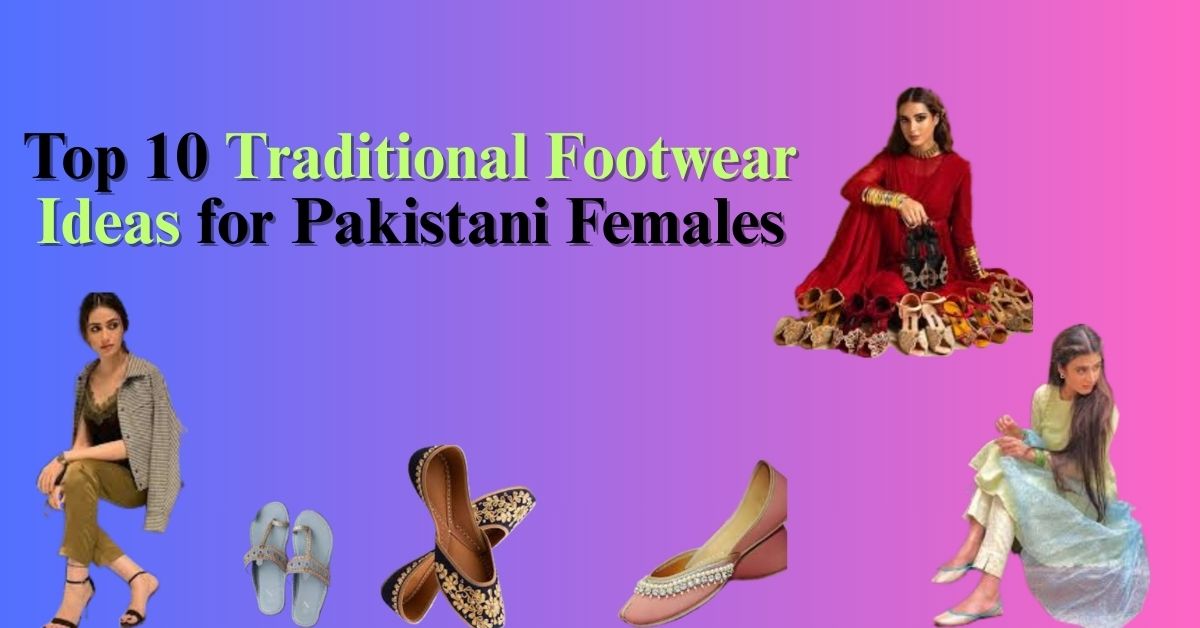
Pakistan’s rich cultural tapestry is reflected in its traditional footwear, which varies by region and occasion. From the embroidered Khussa of Punjab and Sindh to the sturdy Peshawari chappal of Khyber Pakhtunkhwa, these handcrafted shoes combine artistry with comfort. Modern Pakistani women continue to embrace these classics: they are worn with shalwar kameez, fusion dresses, or even jeans, bridging heritage and contemporary style. Below are ten popular traditional shoe styles, each with its regional background, design details, and contemporary usage.
Embroidered Punjabi Khussa (Leather Jutti)
Punjabi Khussa or Jutti is a quintessential South Asian slipper originating in the plains of Punjab. Traditionally made of soft tanned leather, the entire upper is hand-embroidered with intricate motifs in gold and silver thread, sequins, beads, or shell mirrorsbrecorder.com. Historically worn by Mughal nobility, today’s khussas come in vibrant colors to match festive outfits. They are flat and flexible: although the stiff new pair must be “broken in,” they become comfortable for all-day wear. Khussas often feature a pointed toe and are sometimes backless, resembling “bellies” for easy slipping on. They remain favorites for weddings, Eid, and mehndi functionsbrecorder.com, and younger women pair open-backed khussas with jeans and kurtas for a stylish ethnic lookbrecorder.com.
Sindhi Mirror-Embellished Mojari
Sindhi Mojaris (also called Khusso) come from the Sindh and South Punjab regions. These are slip-on mule shoes made of one piece of leather, densely embroidered and “peppered” with mirrors, cowrie shells, beads, and metal studs. The rich mirror work and multicolored thread reflect Sindh’s Sufi heritage and folk art. Like other Punjabi juttis, Sindhi mojaris trace their roots to the Mughal era: under Emperor Saleem Shah (Shah Jahan), jewel-encrusted shoes became popular. Today, Sindhi mojaris are often worn with traditional attire such as Sindhi ajrak shawls or ghararas. The photos above show a pair with ornate mirror embroidery. These flats are sturdy yet soft, making them comfortable for festivals and cultural events. They complement the national shalwar kameez and add heritage flair even to casual dressesbrecorder.com.
Peshawari Chappal (Pakhtun Sandal)
Originating in Peshawar (NWFP/Khyber Pakhtunkhwa), the Peshawari chappal is a classic Pashtun sandal traditionally made from buffalo or camel leather. It has a distinctive “H” or cross-strap front, a closed toe, and often a buckled heel strap for adjustment. The sole is extremely durable – originally cut from repurposed truck tire rubber for grit and shock-absorption – making these chappals ideal for hot summer days. Historically worn by men with shalwar kameez, Peshawari chappals have become a unisex fashion staple. Artisans now add elaborate gold or silver embroidery along the straps to suit festive wear. Because of their comfort and ruggedness, urban youth pair them with jeans or trousers as well. In fact, Pakistani women have embraced this style: designers create lighter, decorative versions for women, with narrower straps and color variations. The beloved “Kaptaan chappal” (named after a former PM) exemplifies this trend.
Balochi Chawats (Embroidered Sandals)
In Balochistan, traditional footwear includes the chawat – a robust leather sandal or shoe often hand-crafted in tribal families. These are typically flat and made of plain leather, sometimes woven with date-palm leaf fibers (called sawas) for ventilated slippers. Women’s Balochi shoes may feature simple cross-stitch embroidery or bead accents reflecting the region’s geometric needlework. The colors often echo Balochi dress embroidery (deep reds, blues, and oranges). Though less ornate than Sindhi khussas, Balochi chawat are highly durable. They are comfortable for daily wear and well-suited to the province’s climate. Modern Pakistani fashion has seen some revival of Baloch motifs: you’ll find flats or slip-ons decorated with Balochi threadwork in boutique collections. These ethnic sandals pair nicely with lawn suits or cotton kurtas, lending a tribal-boho accent without sacrificing comfort.
Velvet & Gota-Embellished Bellies
For festive occasions like mehndi (henna) ceremonies and Eid gatherings, velvet or brocade slippers with gold work are very popular. Known colloquially as bellies or ballerinas, these flats have a soft fabric upper (often velvet or silk) embroidered with metal gota (ribbon) thread, zardozi stitches, sequins, pearls, or stones. The result is a rich, ornate shoe that complements bridal or party wear. Jewel-toned khussas or bellies (in maroon, emerald, navy) are often paired with lehnga or heavily embroidered shalwar suits. Though we lack a specific citation, vendors report that these shoes often use the same bead and stone materials noted for khussasbrecorder.com. Many women find velvet bellies very comfortable: the soft fabric and flat sole cushion the foot. They are seen across Pakistan as a stylish alternative to heels for events – combining tradition (embroidered motifs) with ease of wear (no heel, slip-on style).
Open-Back Khussas (Punjabi Bellies)
A popular everyday style is the open-back khussa or “Punjabi belly.” These look like the usual embroidered leather shoe but with the heel open, making them easy to slip on. As one retailer noted, young women often wear these open-back khussas with jeans and kurta for casual comfortbrecorder.com. The design is practical – you simply step in – yet the toe area remains decorated. These are produced in all colors and embellishments, from simple threadwork to crystal-embellished fronts. Open-back khussas are very comfortable for day-to-day use because they allow more breathing room around the heel. They are especially favored in summer or indoor events. Unlike stiff new pairs, once broken-in they are soft. This versatile style demonstrates how tradition adapts to modern needs: you get the visual appeal of classic embroidery with the ease of a mule.
Hand-Painted Multani Khussa
Multan (south Punjab) is famed for its painted khussas. Skilled artisans hand-paint these leather shoes with floral or paisley motifs, often in vibrant enamel colors. This craft is a multigenerational tradition: one museum notes that even khussas can be hand painted on demand by specialists. A painted khussa might feature a peacock, geometric arabesques, or even scenes from folklore on its surface. The base shoe is the familiar flat jutti shape, but the painted finish makes it striking. These are popular with brides and artists; the rich decoration means they are usually reserved for special wear. Modern adaptations include rubber-soled painted khussas for better durability. In contemporary fashion, a hand-painted khussa adds a splash of Multani color to an outfit, and many younger designers incorporate Multan’s glaze art into casual slip-on shoe designs.
Unembellished Everyday Jutti
Aside from ornate variants, many women prefer plain leather juttis for everyday use. These shoes have the same flat, slip-on form as party juttis but without heavy decoration – typically a simple tan or black leather with minimal stitching. Historically in rural Punjab, an unembellished jutti (sometimes called jalsa jutti) was common footwear. Today, such leather bellies are worn for daily wear or office, and even by girls to school in some areas. They pair with casual salwar suits or tunics. Because they are lighter in color and design, they go with everything and require less care. Importantly, they retain the craftsmanship of traditional sewing (cotton-thread stitching of the sole) while offering a neutral, comfortable shoe. These juttis are beloved by those who want the cultural feel of Khussa without the flair – essentially a functional, ethnically inspired loafer.
Bridal Embellished Jutti (Nagra)
Pakistani brides often step into highly embellished juttis (sometimes called “Nagra”) as part of their wedding trousseau. These bridal juttis are heavily decorated: metallic zardozi or tilla thread, crystal beads, sequins, and even pearls cover the surface. While we don’t have a direct source citation, industry sources note that such khussas can be “sequined with beadwork or encrusted with colorful stones or pearls”brecorder.com to match lehnga embroidery. The toe is often pointed or slightly upturned, evoking the traditional kurpi look. Brides choose colors like gold, ivory, or pastel shades. The interior is padded for all-day ceremonies, but the sole remains flat. These juttis complete the bridal outfit by adding a final touch of heritage elegance. Many women also wear similar embellished flats for pre-wedding events (mehndi, sangeet) with green or pink outfits.
Kolhapuri-Style Braided Leather Sandals (Contemporary Touch)
While Kolhapuri chappals originated in India, versions of braided leather sandals have also found popularity in Pakistan’s markets. These are flat slip-on sandals with interlaced leather straps over the foot, often in tan or gold leather. The design is very much like the traditional Indian Kolhapuri, but Pakistani styles sometimes incorporate native embroidery or metallic thread on the straps for local flavor. Such sandals pair nicely with linen kurtas or fusion outfits, and are appreciated for their airy, open design. They are especially common in summer or coastal areas of Pakistan, offering a breezy alternative to enclosed juttis. Though not strictly indigenous, Kolhapuri-style sandals are embraced by fashion brands as “Pakistani ethnic” footwear for urban and tourist buyers. These sandals demonstrate how South Asian traditions blend across borders – a comfortable flat sandal that complements the regional wardrobe.
In summary, Pakistani women today mix and match these traditional shoes with modern fashion. Classic khussas and mojaris remain essential for weddings and Eid, while Peshawari chappals and embroidered bellies are embraced for casual street style. Artisans continue innovating – adding block heels, rubber soles, and new color palettes – so that these heritage styles fit contemporary lifestyles. Through it all, the core qualities endure: handcrafted detail, cultural symbolism, and comfort. As fashion evolves, these footwear types still tell the story of Pakistan’s diverse regions and timeless craftsmanship.